Cat and Kitten Vaccination Guide 2026: Benefits and Schedule


Cat and Kitten Vaccination Guide 2026: Benefits and Schedule

Cat and Kitten Vaccination Guide 2026: Benefits and Schedule

Dr. Lidija Krvavac

Updated Date

Updated Date

8 minutes

8 minutes

Custom Icon
Custom Icon
Custom Icon

This article has been reviewed by Dr. Soheyl Simaei on 15 May 2026.
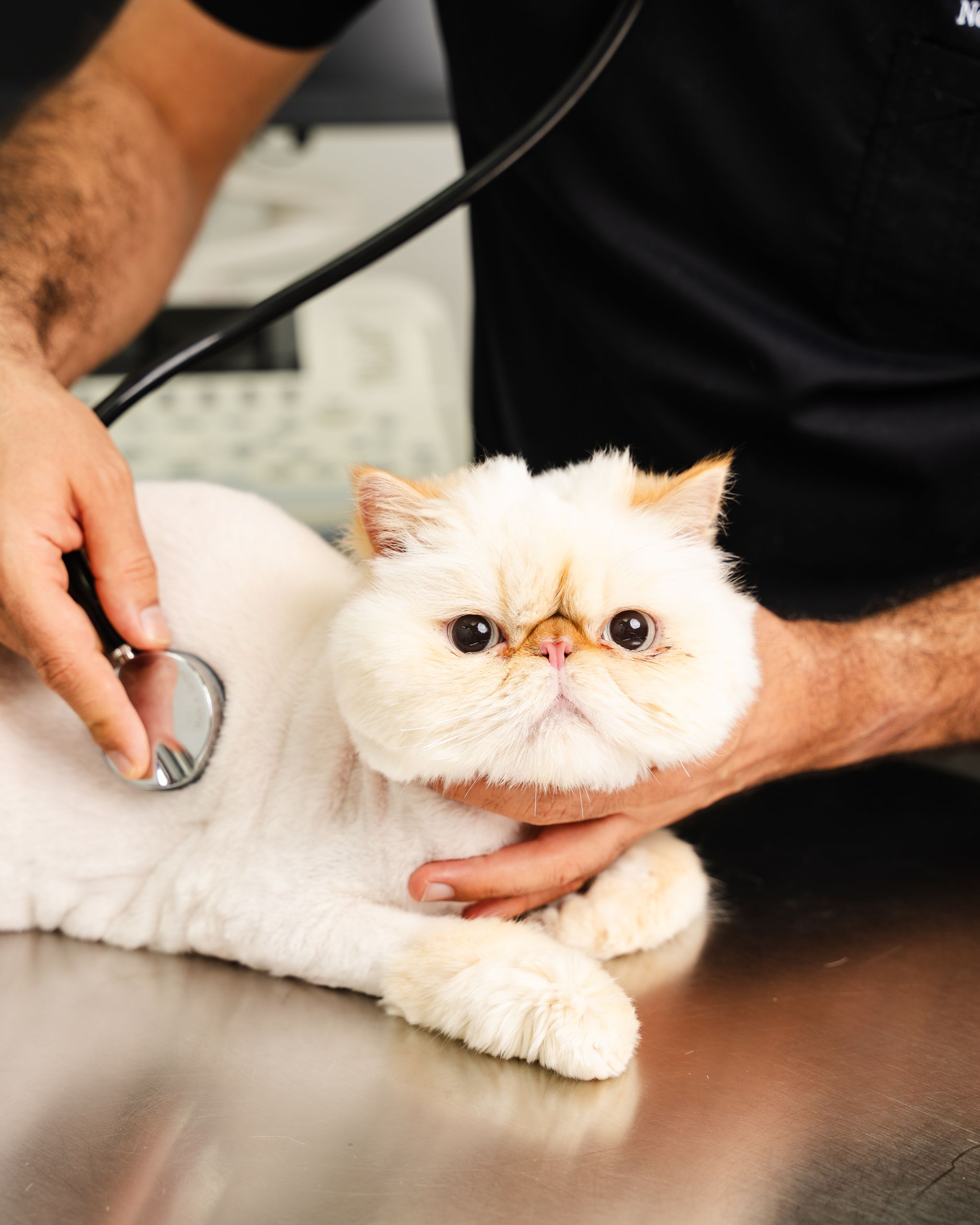
A white cat is being prepared for the vaccination process.

In This Article

In This Article

Cat vaccines work by using a deactivated form of the virus or bacteria, helping the immune system recognize the pathogen and develop antibodies in response. When the real threat comes, the cat’s immune system is ready to defend. 
Key Takeaways

Cat vaccinations are essential to safeguard your cat and reduce the spread of disease. They are also required by law for pet ownership and travel.

Core vaccines include rabies and FVRCP. The first dose for FVRCP must be given at 6-8 weeks of age.

Potential side effects include fever, lethargy, soreness at the injection site, and a reduced appetite.

What Are the Benefits of Vaccines for Cats?

One of the main reasons why it’s important to vaccinate your cat is the protection it offers. Vaccinated cats are significantly less likely to develop severe disease. These preventive treatments also prevent the spread of disease and are fully customizable according to your cat’s needs. 

This ultimately means lower medical and unexpected emergency costs. Additionally, cat vaccinations are required for pet ownership, a vet health certificate, access to local pet services, and international travel.

Here’s a quick overview of cat vaccines from our head vet, Dr. Soheyl Simaei. 

What Vaccines Do Cats Need?

Cats require two core vaccinations: rabies and FVRCP. Non-core variations can be recommended and provided as needed. 

Core Cat Vaccinations

These are essential for all cats in order to protect their health and the community. 

Anti-Rabies Vaccine

This helps protect cats against rabies, a deadly viral disease. The virus can easily spread to other animals when infected saliva reaches bite wounds and mucous membranes. It’s also zoonotic, meaning humans can be affected. 

Once infected, the cat may experience rapid neurological deterioration, leading to behavioral changes, extreme aggression, and irritability. At the final stage, cats will experience paralysis, foaming at the mouth, and even death. 

Prevention is the only effective solution against this disease. Common rabies vaccine options for cats include Purevax and Rabisin. 

FVRCP

A combination vaccine that protects cats against three highly contagious diseases: feline viral rhinotracheitis, feline calicivirus, and feline panleukopenia. The standard brands for FVRCP are Nobivac, Purevax, and Felocell. 

  • Feline Viral Rhinotracheitis: A severe upper respiratory infection caused by FHV-1. It’s a major cause of cat flu and results in sneezing, nasal discharge, and conjunctivitis. FVR affects over 90% of cats exposed to the virus. It’s generally transmitted through direct contact with infected saliva, eye discharge, or nasal secretions. 

  • Feline Calicivirus: A viral disease that causes upper respiratory infections, oral ulcers, and even joint pain. FCV is transmitted through direct contact with infected saliva, eye or nasal discharge, and respiratory droplets. While cats may recover within 7-10 days, most become carriers for months. 

  • Feline Panleukopenia: A highly contagious disease caused by feline parvovirus, which targets rapidly dividing cells and severely reduces the cat’s white blood cell count. It also attacks the intestines and bone marrow, 

Non-Core Cat Vaccinations 

Lifestyle options are recommended based on the cat’s location, risk of disease, lifestyle, and overall health. Some will require these, while others will not. 

Feline Leukemia Virus Vaccine

This protects against FeLV, a virus that can significantly compromise a cat’s immune system and increase their risk of infections, anemia, and even certain cancers. It’s highly recommended for cats that love to go outdoors or live with other infected cats. 

Bordetella Vaccine

Another option recommended for cats who frequently stay in shared spaces, such as multi-pet households, boarding facilities, and grooming salons. These are often places where respiratory infections spread easily. 

Need help with your cat's protection?

Need help with your cat's protection?

Let's get their vaccinations started.

Let's get their vaccinations started.

When Should You Vaccinate Your Cat?

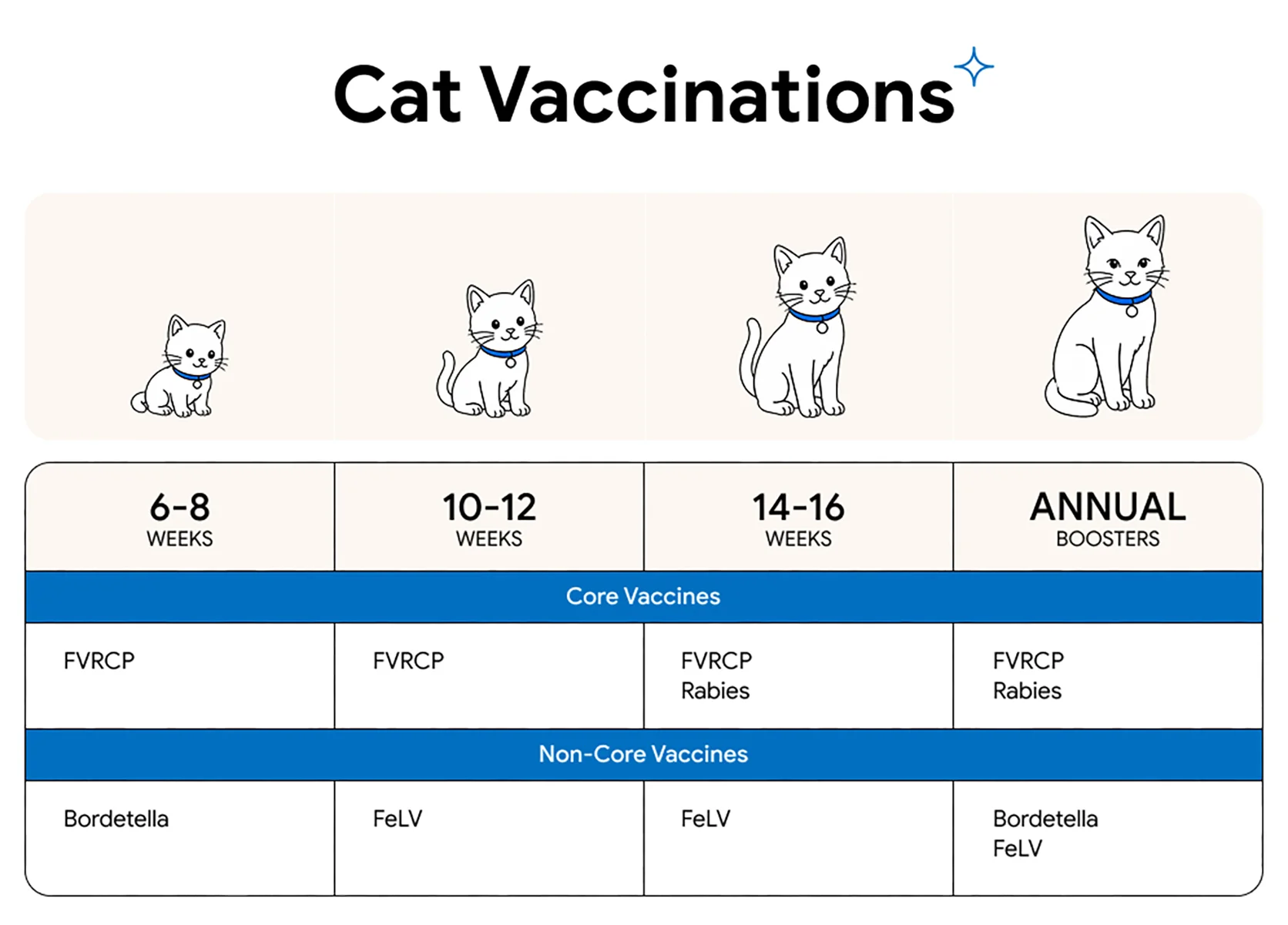
Our veterinarians recommend having your cat vaccinated with FVRCP at 6-8 weeks old. Boosters will be provided every 3-4 weeks until they reach 16-20 weeks old. This will then be followed up by a booster shot after a year, then subsequent boosters every 1-3 years. 

Rabies will be administered when cats reach 14-16 weeks of age, followed by a booster shot a year later. The rabies vaccine requires annual boosters. 

Kitten Vaccination Schedule

At the clinic, our vets will help set up a schedule that works for you and your cat. We’ll base this on your cat’s age, health, and lifestyle. 

Age

6-8 weeks

10-12 weeks

14-16 weeks

Core Vaccines

FVRCP

FVRCP

FVRCP
Rabies

Non-Core Vaccines

Bordetella

FeLV

FeLV

Adult Cat Vaccination Schedule

Boosters shots are essential to maintain your cat’s immunity to these diseases. Here’s what you can expect:

Frequency

Annually

Core Vaccines

FVRCP
Rabies

Non-Core Vaccines

Bordetella
FeLV

How Much Do Vaccines Cost?

Our initial FVRCP vaccination will cost AED 360. Boosters, Dubai Municipality tag and registration, and other vaccines, such as rabies, will be priced at AED 510. Both options will include a vet exam and checkup. 

How Does the Vaccination Process Work

The procedure is quick and simple, often taking a few minutes. Here’s how the process is done at our clinic:

  1. Checkup and Review

Our veterinarians will review your cat’s medical history and ask about their age, lifestyle, and other related details. We’ll also check their weight, temperature, and overall condition before administering the vaccine. In some cases, we may need to do a blood test. 

  1. Recommendations and Discussions

Before proceeding with treatment, we’ll discuss with you the vaccines your cat needs. Lifestyle options will be recommended if needed. 

  1. Administering the Vaccine

Our veterinarians will gently prepare your cat for the injection. Cat vaccinations are primarily administered subcutaneously. FVRCP will be administered on the right front leg, while rabies will be on the right rear leg. 

  1. Monitoring and Guidance

We’ll monitor your cat for any reactions after the procedure and discuss what you may expect at home. Our vets will also provide suggestions for home care, update your cat’s vaccination records, and send you timely reminders for the next appointment. 

A pet owner is asking advice about her cat's vaccination process and schedule.

Will Cats Experience Adverse Reactions?

Generally, mild side effects are possible after the procedure. This may include lethargy, swelling on the injection site, fever, loss of appetite, and a runny nose. However, this typically resolves within 24-48 hours. Always monitor your cat closely at home. 

In rare cases, cats may experience severe symptoms such as anaphylaxis, facial swelling, hives, vomiting, difficulty breathing, or collapse. If any of these happen, bring your cat to the clinic right away for emergency treatment.

What Is the Dubai Municipality Tag and Registration?

The DM tag and registration signify that your cat has met official Dubai health and safety standards. For pets, this means that they have been microchipped and vaccinated. Upon registration, you will receive a small plastic tag, which must be placed on your cat’s collar. 

“Keeping our cats happy means protecting them from the dangers they don’t know about.”

- Dr. Lidija Krvavac

As part of your cat’s health, vaccinations offer the most effective form of preventive care. They’re the best treatments that keep our best friends safe from dangerous diseases and painful conditions. Let’s start strengthening their immune systems today.

Frequently Asked Questions

Can cat vaccines be used to treat diseases?

No, they are only designed to prevent illness. Once a cat is infected or sick, a vaccine administered after that won’t help fight the infection.

Can cat vaccines be used to treat diseases?

No, they are only designed to prevent illness. Once a cat is infected or sick, a vaccine administered after that won’t help fight the infection.

What happens if my cat misses a dose?

Contact our veterinarians right away to schedule an appointment as soon as possible. If the delay reaches more than 2 weeks, kittens will need to restart the initial series.

What happens if my cat misses a dose?

Contact our veterinarians right away to schedule an appointment as soon as possible. If the delay reaches more than 2 weeks, kittens will need to restart the initial series.

Can seniors receive cat vaccinations?

Yes, they can. Specifics will be discussed with our veterinarians, depending on the cat’s needs, health, and overall condition.

Can seniors receive cat vaccinations?

Yes, they can. Specifics will be discussed with our veterinarians, depending on the cat’s needs, health, and overall condition.

Can cats take the shot even when they feel sick?

We don’t recommend vaccinating your cat when they are sick. These may only be given to healthy cats to ensure that their immune systems can respond well and to minimize the risk of worsening current illness.

Can cats take the shot even when they feel sick?

We don’t recommend vaccinating your cat when they are sick. These may only be given to healthy cats to ensure that their immune systems can respond well and to minimize the risk of worsening current illness.

Are vaccines safe for pregnant cats?

Our veterinarians don’t recommend vaccinating a pregnant cat because of the potential for certain complications, such as birth defects, brain damage, and pregnancy loss.

Are vaccines safe for pregnant cats?

Our veterinarians don’t recommend vaccinating a pregnant cat because of the potential for certain complications, such as birth defects, brain damage, and pregnancy loss.

Share

Share

Custom Icon
Custom Icon
Custom Icon

Subscribe to Our Newsletter

Sign up for weekly pet health tips and insights from our veterinarians.

Sign up for weekly pet health tips and insights from our veterinarians.

Wellness & Emergency Care

Book Appointment

Worried about your pet?

We’re here for urgent care, wellness checks, or anything in between. 

At Noble Vet Clinic, we support lifelong pet wellness and the relationships that make it meaningful.

We’re Hiring! Let’s transform the future of veterinary care together.

We’re Hiring! Let’s transform the future of veterinary care together.

We’re Hiring! Let’s transform the future of veterinary care together.

We’re Hiring!

© 2006-2026 Noble Veterinary Clinics

Noble Vet Clinics logo
Your veterinary practice, always here
Instagram icon
Facebook icon
LinkedIn icon
TikTok icon

© 2006-2026 Noble Veterinary Clinics

Noble Vet Clinics logo

Policies

Contact Us

DIP - 8am to 9pm
JLT - 10am to 7pm

Jumeirah -

Mon-Fri: 8am to 8pm

Sat-Sun: 9am to 6pm

© 2006-2026 Noble Veterinary Clinics