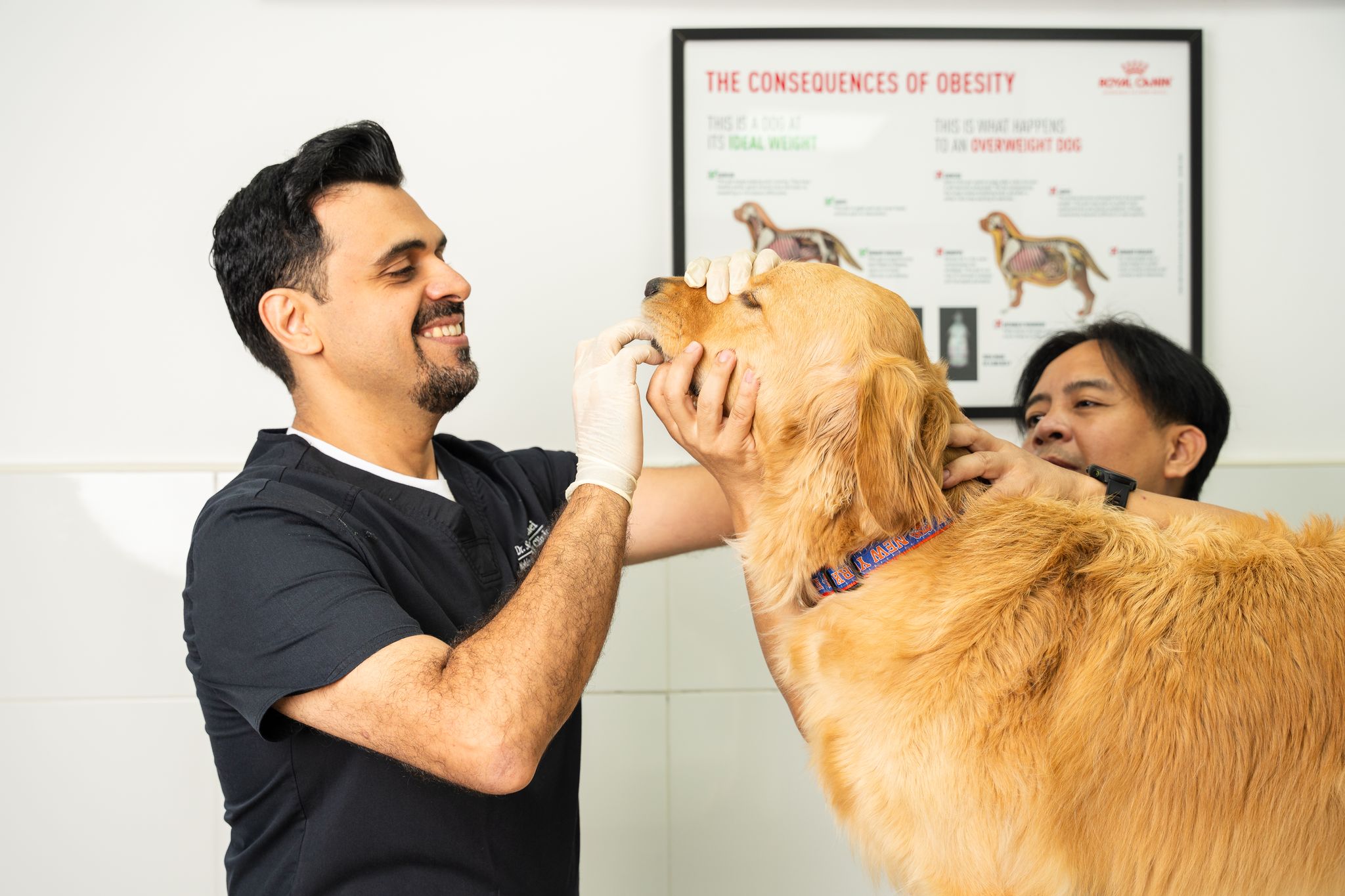
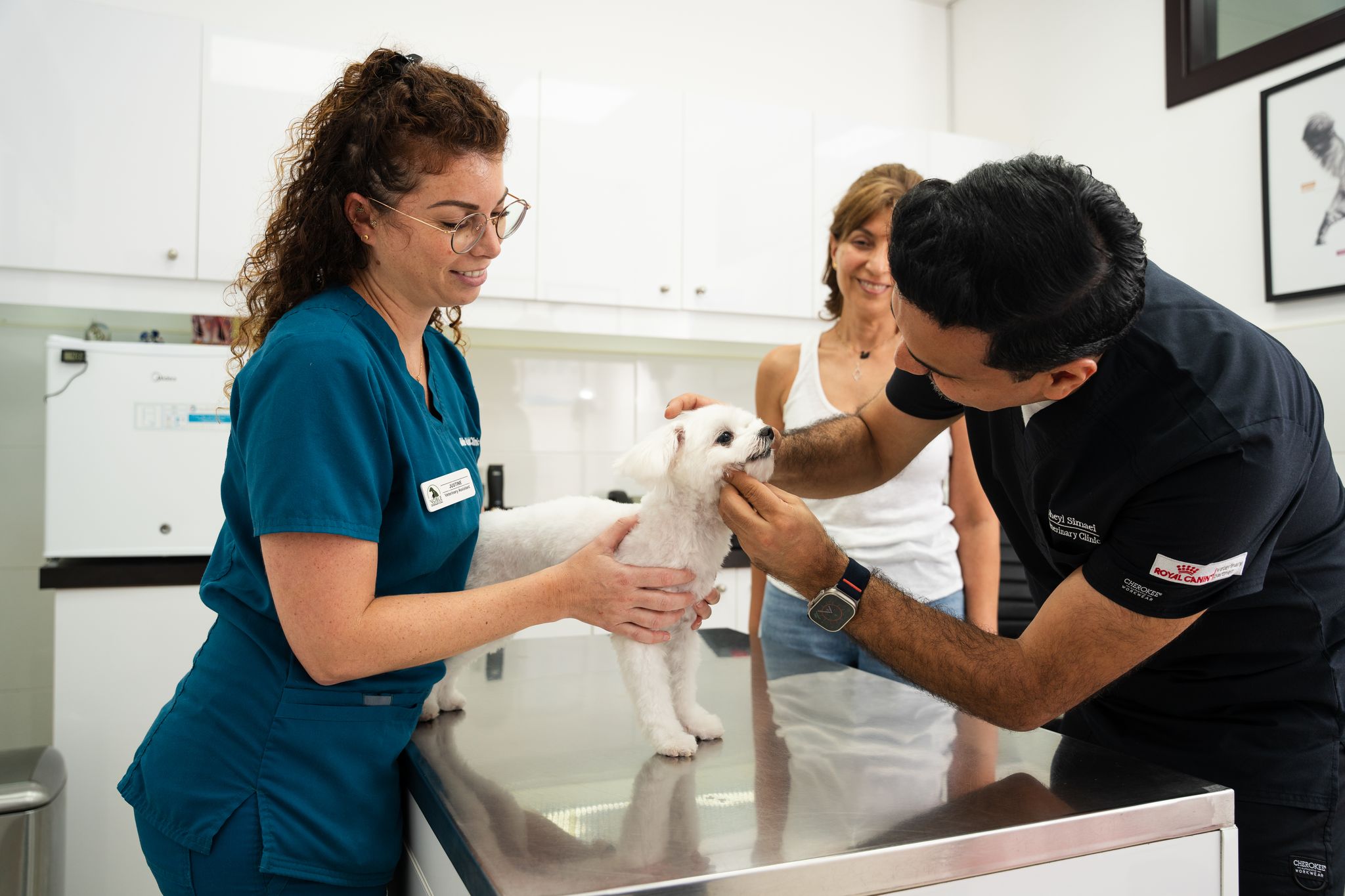
Good oral health translates seamlessly into good overall health for dogs. It starts with a practiced routine at home and professional dental cleaning. Our veterinarians always emphasize its importance.
Key Takeaways
Dog dental care prevents severe oral disease, stops bacteria from entering the bloodstream, and promotes comfort.
Common signs of dental disease include bad breath, yellow or brown buildup, drooling, red or bleeding gums, loose teeth, and chewing on one side.
Daily brushing is ideal. If not possible, aim to brush your dog’s teeth at least 2-3 times a week.
What’s the Importance of a Dog’s Dental Health?
Complete dog dental care matters because it prevents plaque and tartar buildup. By doing so, it avoids severe and painful conditions such as gum disease and tooth root abscesses.
Additionally, it also helps prevent bacteria from entering the bloodstream and spreading to the heart, kidneys, and liver. Good oral care for dogs also eliminates bad breath and avoids painful eating difficulties.
How Does Plaque and Tartar Form?
Plaque is essentially a soft film of bacteria, food particles, and saliva that coats the teeth and gumline. If not cleaned out, the minerals in the dog’s saliva harden this plaque into rough tartar, which is much harder to remove.
Plaque can harden into tartar in just 24-72 hours. Tartar is more serious because its porous surface creates the perfect breeding ground for even more bacteria. This accelerates the progression of dental disease.
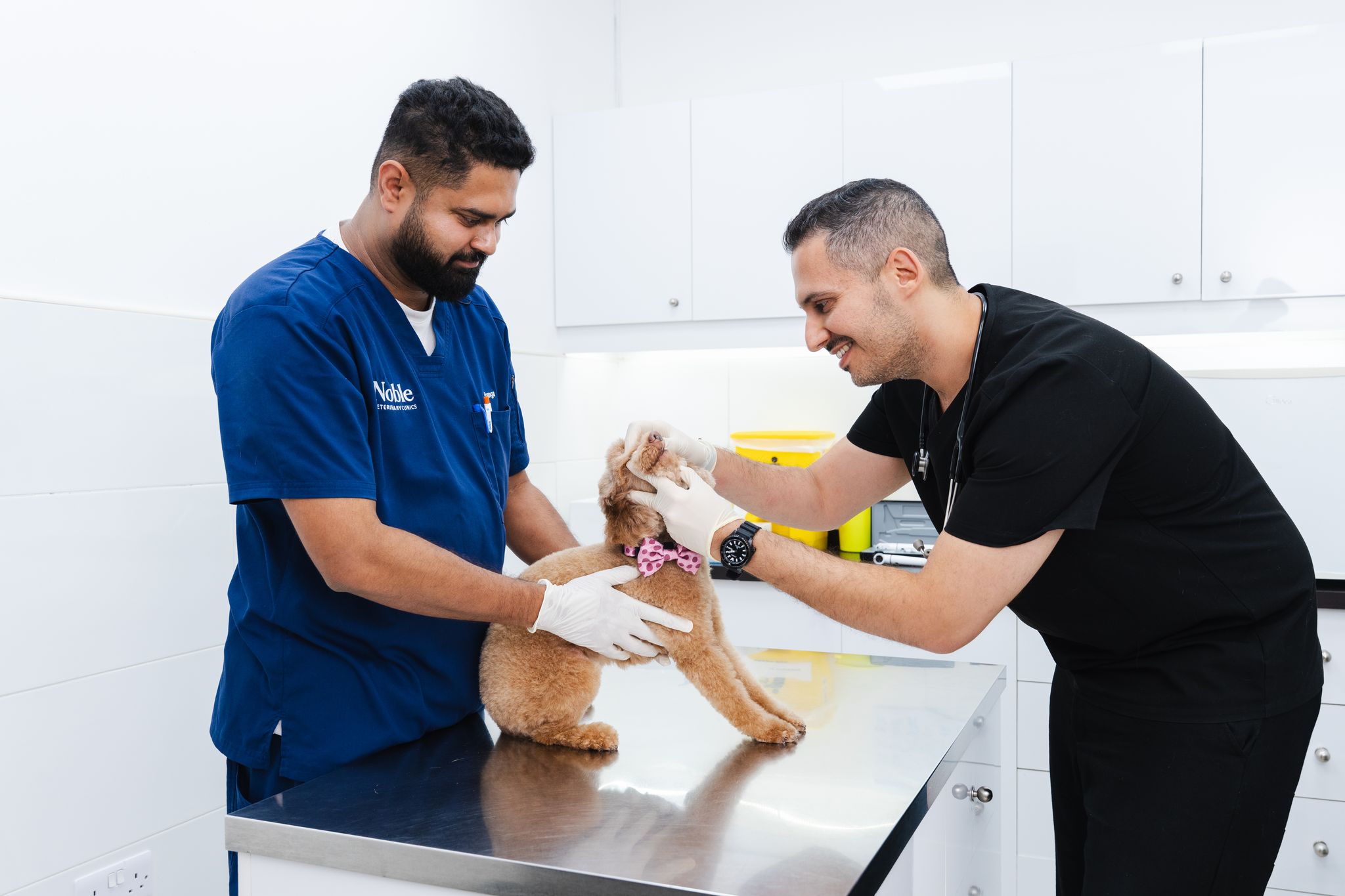
Signs Your Dog May Have Dental Problems
Here are the common symptoms our veterinarians observe in dogs:
Bad breath that doesn’t improve
Yellow or brown buildup on the teeth
Red, swollen, or bleeding gums
Drooling more than usual
Pawing at the mouth or face
Chewing on one side
Avoiding hard food or treats
Loose, broken, or missing teeth
Overall loss of interest and discomfort
If you notice any of these signs, contact our vets so we can help your dog recover.
Dog Dental Care Tips by Age
A dog’s dental health needs vary by life stage. Here’s a quick overview:
Puppies
For puppies, the goal is to build habits and provide relief from teething. You may start by using a finger cot and letting your finger rub their gums as a form of practice. Gradually introduce an appropriate dog toothpaste and toothbrush once they get used to it.
Rewards are helpful to promote good behavior and feelings about this activity. You may also provide soft and safe chew toys to soothe their sore gums and help the baby teeth fall off. Always check and monitor their teeth regularly.
Adult Dogs
For adults, the goal is to maintain the established routine and prevent plaque buildup. This is the stage where consistency matters the most. We recommend brushing your dog’s teeth daily, but if that’s not possible, aim for at least 2-3 times a week.
Dental chews and products can support oral health, but they should not replace regular brushing. Adult dog dental care should also include professional oral exams and cleaning sessions.
Senior Dogs
Seniors are more likely to develop plaque and tartar buildup, gum disease, and loose teeth. This means that the focus shifts to monitoring for disease and preventing tooth decay. Keep the brushing routine consistent and always look out for the common signs of dental issues.
Some seniors will require more frequent dental exams and cleanings for comfort. Tooth extractions are often recommended to provide relief from the extreme pain and improve their quality of life.
How Do I Brush My Dog’s Teeth?
The brushing routine is simple when you have the right tools. Start by preparing a dog-specific toothbrush or finger brush, dog-safe toothpaste, and a couple of treats for later. Here’s a quick guide from our vets:
Let your dog lick the toothpaste from your finger.
Lift the lip and gently massage the outside of the teeth and gums.
Apply the toothpaste to the toothbrush and introduce it.
Gently brush in circular motions at a 45° angle against the gumline.
Focus on the outside surfaces of the canines and back molars.
Keep the sessions short at around 1-2 minutes.
Give treats and praise after the brushing session.

When Is Professional Dog Dental Cleaning Needed?
Small breeds and other dogs prone to dental disease may require professional dental cleaning every 6-9 months. Start their first session by the age of 1.
For medium to large dog breeds, professional cleaning may begin at age 2, with regular appointments at least once a year. Seniors may need oral cleaning sessions every 6 months.
Here’s what you can expect from the appointment:
Full oral exam (mouth, teeth, and gums)
Dental probing and radiographs
Anesthesia and monitoring
Ultrasonic scaling and polishing
Fluoride treatments
Oral surgery and treatment (if needed)
How Do Vets Grade Dental Health in Dogs?
Grade | What It Means |
|---|---|
0 (Good Oral Health) | Teeth and gums look healthy with little to no plaque or tartar. |
1 (Gingivitis) | Mild plaque or tartar is present, and gums have slight redness. |
2 (Early Periodontitis) | Plaque and tartar buildup are more noticeable, and gums are inflamed. |
3 (Moderate Periodontitis) | Significant tartar buildup, inflammation, and gum recession. |
4 (Advanced Periodontitis) | Severe tartar buildup, deep gum pockets, loose teeth, and bleeding gums. |
“Protecting our dogs’ smiles is one of the best ways to safeguard their health.”
- Dr. Soheyl Simaei
Dog dental care is an important part of keeping your dog healthy and comfortable. A consistent routine effectively prevents plaque and tartar buildup, helping avoid many painful oral conditions. Paired with professional cleaning, your dog’s oral health stays secure.
Frequently Asked Questions
Subscribe to Our Newsletter
Worried about your pet?
We’re here for urgent care, wellness checks, or anything in between.