Eye Care for Pets
Veterinary Ophthalmology
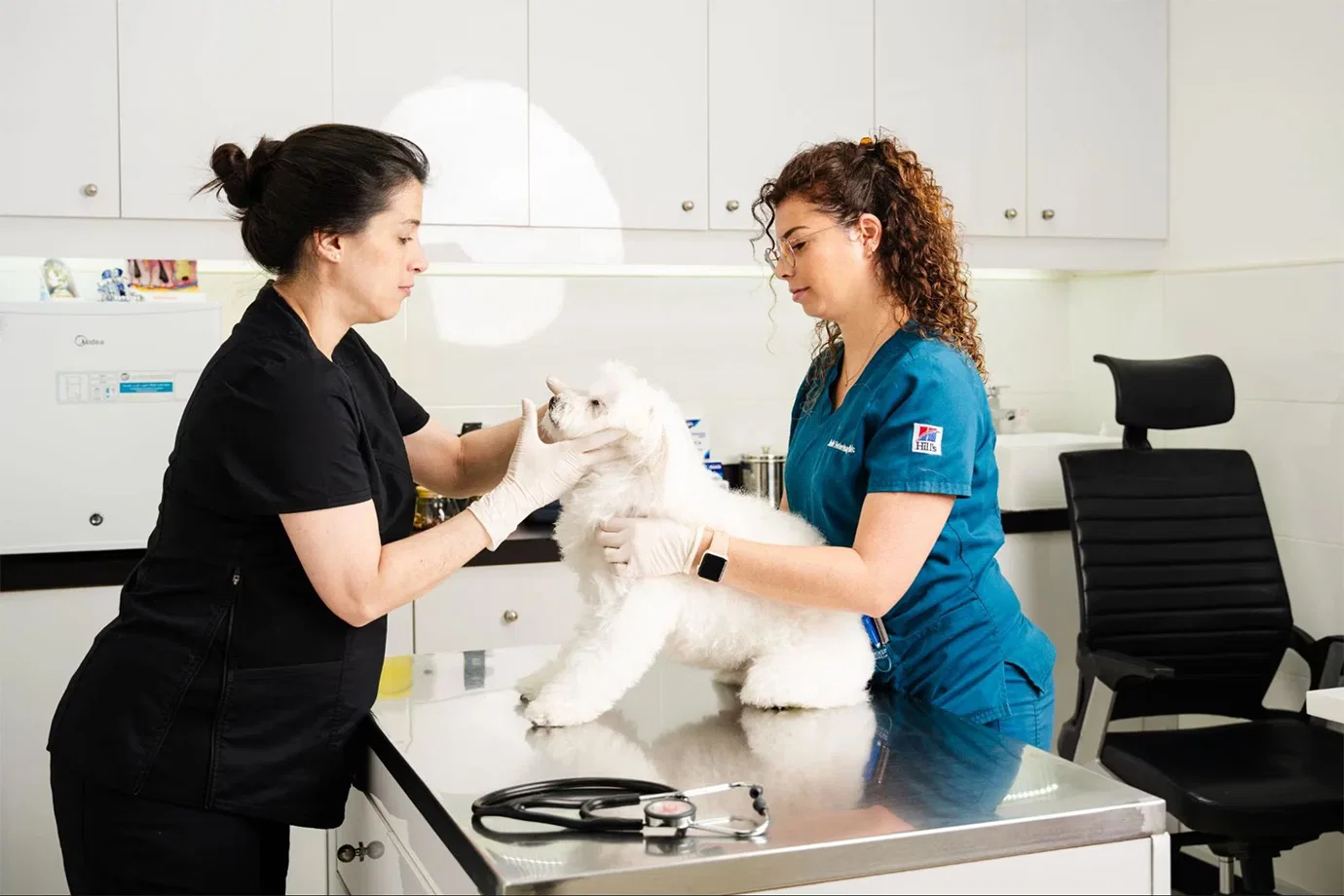
Led by a full-time specialist ophthalmologist, we diagnose and treat everything from routine eye infections to complex surgical cases.
or call us on
Eye Care for Pets
Veterinary Ophthalmology
Led by a full-time specialist ophthalmologist, we diagnose and treat everything from routine eye infections to complex surgical cases.
or call us on
Eye Care for Pets
Veterinary Ophthalmology
Led by a full-time specialist ophthalmologist, we diagnose and treat everything from routine eye infections to complex surgical cases.
or call us on
Eye Care for Pets
Veterinary Ophthalmology
Led by a full-time specialist ophthalmologist, we diagnose and treat everything from routine eye infections to complex surgical cases.
or call us on
What is veterinary ophthalmology?
A specialised branch of veterinary medicine that's focused on diagnosing, managing, and treating eye conditions in animals. Our vet eye specialists handle common issues such as cataracts, glaucoma, corneal ulcers, and inherited eye diseases.
If you've noticed subtle issues with your pet's eyes, then it's best to have them checked early. Many conditions may progress quickly, which is why we're here to help.
Backed by a full-time specialist ophthalmologist and advanced diagnostic equipment, we'll help your pet regain comfort with vision.
Why should your pet visit a vet eye specialist?
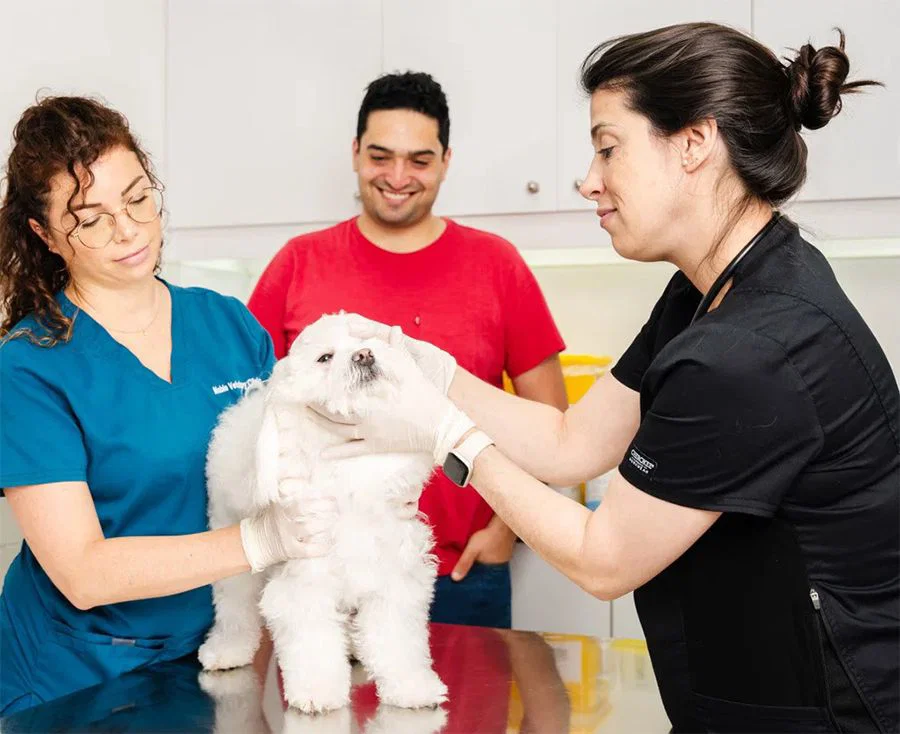
Advanced Diagnostics
Our clinic is well-equipped with the tools and technology to pinpoint eye issues and their source accurately.
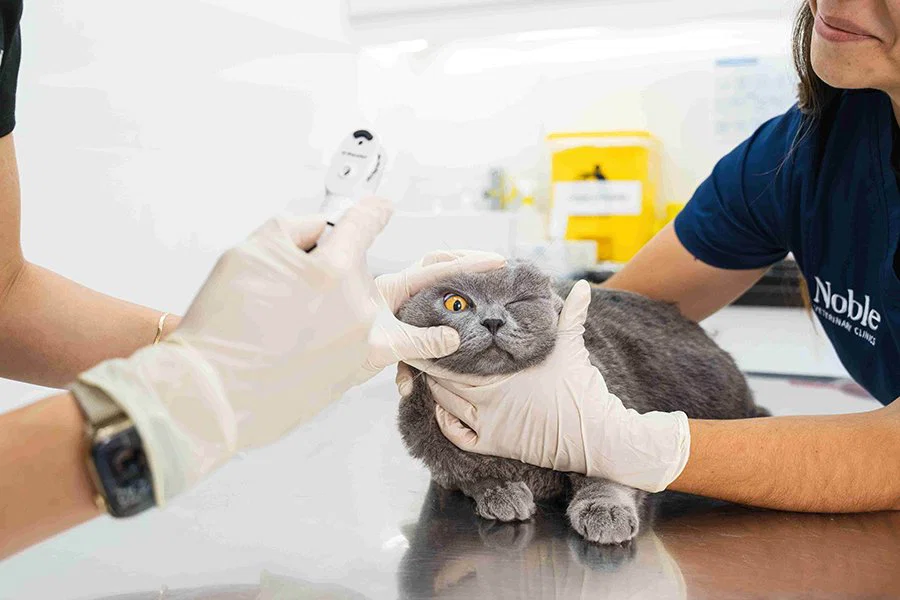
Experienced Ophthalmologists
We have a specialised team of pet eye specialists who are highly experienced in diagnosing and treating eye problems.
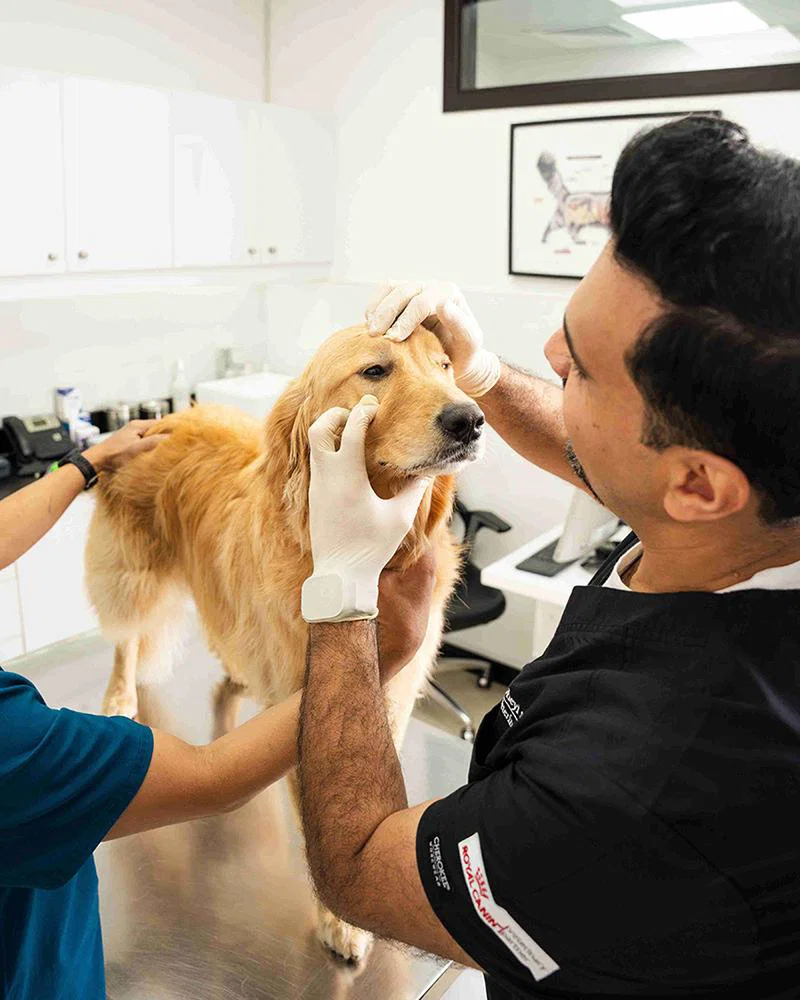
Specialized Surgeries
For complex cases, our veterinary ophthalmologists can perform precise surgical treatments and corrections.
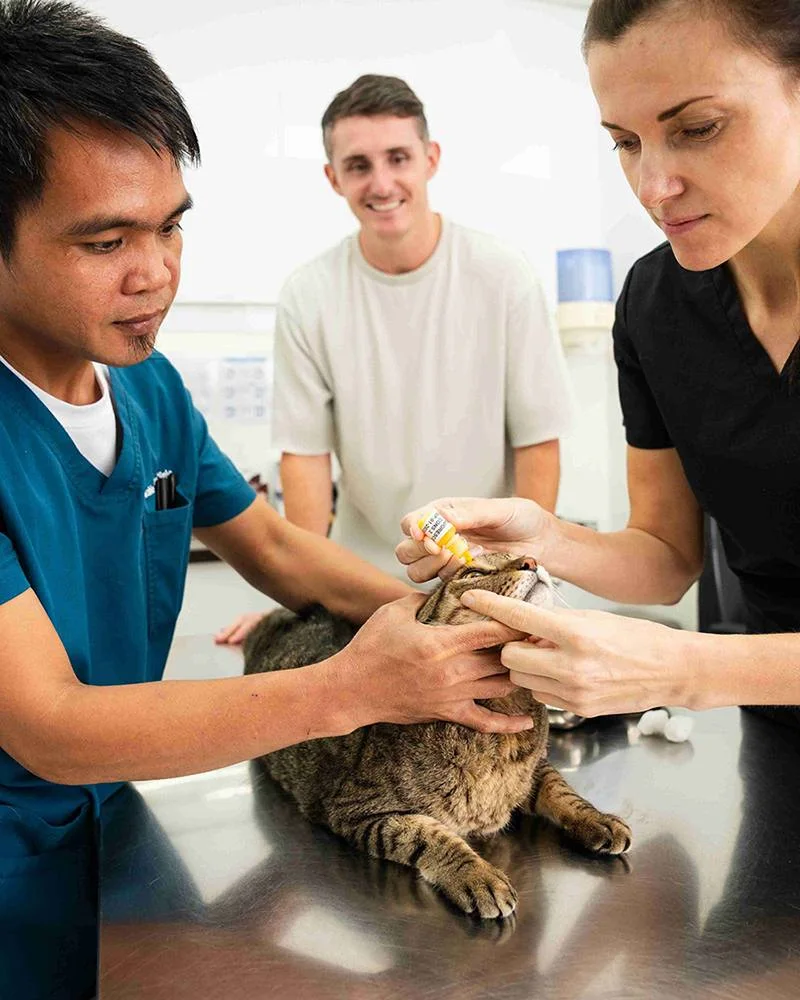
Personalized Treatments
Our treatment plans are designed to address every aspect of your pet's eye problem, ensuring a smooth recovery.
How to know if my pet has an eye problem?
Eye issues in pets can develop quickly, so if you notice any of the signs at home, it's best to bring them to the clinic.
Redness or inflammation
Squinting or excessive blinking
Cloudy or bluish eyes
Discharge (clear, yellow, or green)
Visible third eyelid
Rubbing or pawing at the eyes
Swelling of the eyelids or around the eye
Bumping into objects
Light sensitivity
Growths on the eyelids
Early diagnosis can make a big difference. Let's get started.
Common signs of eye disease in pets

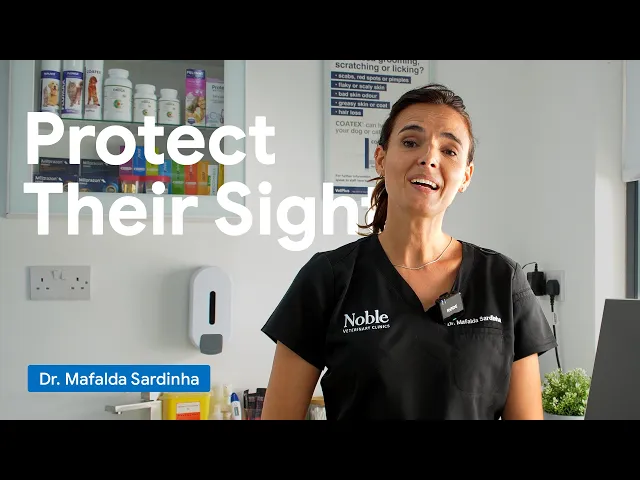
Common signs of eye disease in pets | Noble's Dr. Mafalda Explains
Noble Veterinary Clinics
Common signs of eye disease in pets
Common signs of eye disease in pets | Noble's Dr. Mafalda Explains
Noble Veterinary Clinics
Common signs of eye disease in pets
Common signs of eye disease in pets | Noble's Dr. Mafalda Explains
Noble Veterinary Clinics
What do we offer to support your pet's eyes?
What do we offer to support your pet's eyes?
Using our advanced tools and specialized expertise, we help restore your pet's vision and maintain comfort. Here are some of the many cases we cover at the pet eye clinic:
Using our advanced tools and specialized expertise, we help restore your pet's vision and maintain comfort. Here are some of the many cases we cover at the pet eye clinic:
01
Eye Infection Treatment
Depending on the cause, we prescribe antimicrobials and other meds, remove foreign bodies, or conduct surgery.
Learn More
01
Eye Infection Treatment
Depending on the cause, we prescribe antimicrobials and other meds, remove foreign bodies, or conduct surgery.
Learn More
02
Conjunctivitis Care
We make use of antibiotic/antiviral eye drops and ointments, anti-inflammatories, and supportive care.
Learn More
02
Conjunctivitis Care
We make use of antibiotic/antiviral eye drops and ointments, anti-inflammatories, and supportive care.
Learn More
03
Cherry Eye Correction
Our team performs surgical correction to reposition the gland to its proper location and provides post-OP care.
Learn More
03
Cherry Eye Correction
Our team performs surgical correction to reposition the gland to its proper location and provides post-OP care.
Learn More
04
Entropion Repair
We carefully reposition the eyelid to its proper location, followed by medication, an E-collar, and monitoring.
Learn More
04
Entropion Repair
We carefully reposition the eyelid to its proper location, followed by medication, an E-collar, and monitoring.
Learn More
05
Cataract Surgery
Our vets perform phacoemulsification to break down the cloudy lens and replace it with a clear, artificial one.
Learn More
05
Cataract Surgery
Our vets perform phacoemulsification to break down the cloudy lens and replace it with a clear, artificial one.
Learn More
05
Cataract Surgery
Our vets perform phacoemulsification, a procedure which breaks down the cloudy lens, replaced by artificial ones.
Learn More
06
Complex Eye Cases
We also diagnose and manage complex eye conditions like glaucoma, corneal ulcers, and progressive retinal atrophy.
Learn More
06
Complex Eye Cases
We also diagnose and manage complex eye conditions like glaucoma, corneal ulcers, and progressive retinal atrophy.
Learn More
How do we examine your pet’s eyes?
Eye Exams
A complete eye exam tailored to your pet’s needs. We’ll examine your pet’s vision, eye structure, and overall eye health.
Schirmer Tear Test
A Schirmer tear test measures tear production using a soft strip of paper. This helps identify problems like dry eye.
Tonometry
We use a tonometer to measure eye pressure painlessly. This helps diagnose conditions like glaucoma in cats and dogs.
Eye Stain Test
A yellow-orange dye is applied to the eye and viewed under a special blue light to highlight any damage.
Fundoscopy
A quick and painless procedure that allows us to examine the retina, optic nerve, and blood vessels.
Slit Lamp Biomicroscopy
We use a high-powered microscope to visualize the front part of the eye in detail to detect complex issues.
Chromatic PLR Testing
This method uses different light colors (red and blue) to assess the function of the retina and optic nerve.
Cytology
We collect cells from the eyes and examine them under a microscope to detect infections or inflammation.
Biopsy
A small sample of tissue is collected from the eye or eyelid to diagnose tumors, cancer, or infections.
Ocular Ultrasound
Allows us to visualize the interior structures of the eye, particularly useful when direct viewing is impossible.
Gonioscopy
This test uses a special lens to examine the drainage area of the eyes, vital in identifying conditions like glaucoma.
Electroretinogram
An ERG measures electrical activity in the retina in response to light to assess function and diagnose conditions.
Eye Exams
A complete eye exam tailored to your pet’s needs. We’ll examine your pet’s vision, eye structure, and overall eye health.
Schirmer Tear Test
A Schirmer tear test measures tear production using a soft strip of paper. This helps identify problems like dry eye.
Tonometry
We use a tonometer to measure eye pressure painlessly. This helps diagnose conditions like glaucoma in cats and dogs.
Eye Stain Test
A yellow-orange dye is applied to the eye and viewed under a special blue light to highlight any damage.
Fundoscopy
A quick and painless procedure that allows us to examine the retina, optic nerve, and blood vessels.
Slit Lamp Biomicroscopy
We use a high-powered microscope to visualize the front part of the eye in detail to detect complex issues.
Chromatic PLR Testing
This method uses different light colors (red and blue) to assess the function of the retina and optic nerve.
Cytology
We collect cells from the eyes and examine them under a microscope to detect infections or inflammation.
Biopsy
A small sample of tissue is collected from the eye or eyelid to diagnose tumors, cancer, or infections.
Ocular Ultrasound
Allows us to visualize the interior structures of the eye, particularly useful when direct viewing is impossible.
Gonioscopy
This test uses a special lens to examine the drainage area of the eyes, vital in identifying conditions like glaucoma.
Electroretinogram
An ERG measures electrical activity in the retina in response to light to assess function and diagnose conditions.
Eye Exams
A complete eye exam tailored to your pet’s needs. We’ll examine your pet’s vision, eye structure, and overall eye health.
Schirmer Tear Test
A Schirmer tear test measures tear production using a soft strip of paper. This helps identify problems like dry eye.
Tonometry
We use a tonometer to measure eye pressure painlessly. This helps diagnose conditions like glaucoma in cats and dogs.
Eye Stain Test
A yellow-orange dye is applied to the eye and viewed under a special blue light to highlight any damage.
Fundoscopy
A quick and painless procedure that allows us to examine the retina, optic nerve, and blood vessels.
Slit Lamp Biomicroscopy
We use a high-powered microscope to visualize the front part of the eye in detail to detect complex issues.
Chromatic PLR Testing
This method uses different light colors (red and blue) to assess the function of the retina and optic nerve.
Cytology
We collect cells from the eyes and examine them under a microscope to detect infections or inflammation.
Biopsy
A small sample of tissue is collected from the eye or eyelid to diagnose tumors, cancer, or infections.
Ocular Ultrasound
Allows us to visualize the interior structures of the eye, particularly useful when direct viewing is impossible.
Gonioscopy
This test uses a special lens to examine the drainage area of the eyes, vital in identifying conditions like glaucoma.
Electroretinogram
An ERG measures electrical activity in the retina in response to light to assess function and diagnose conditions.
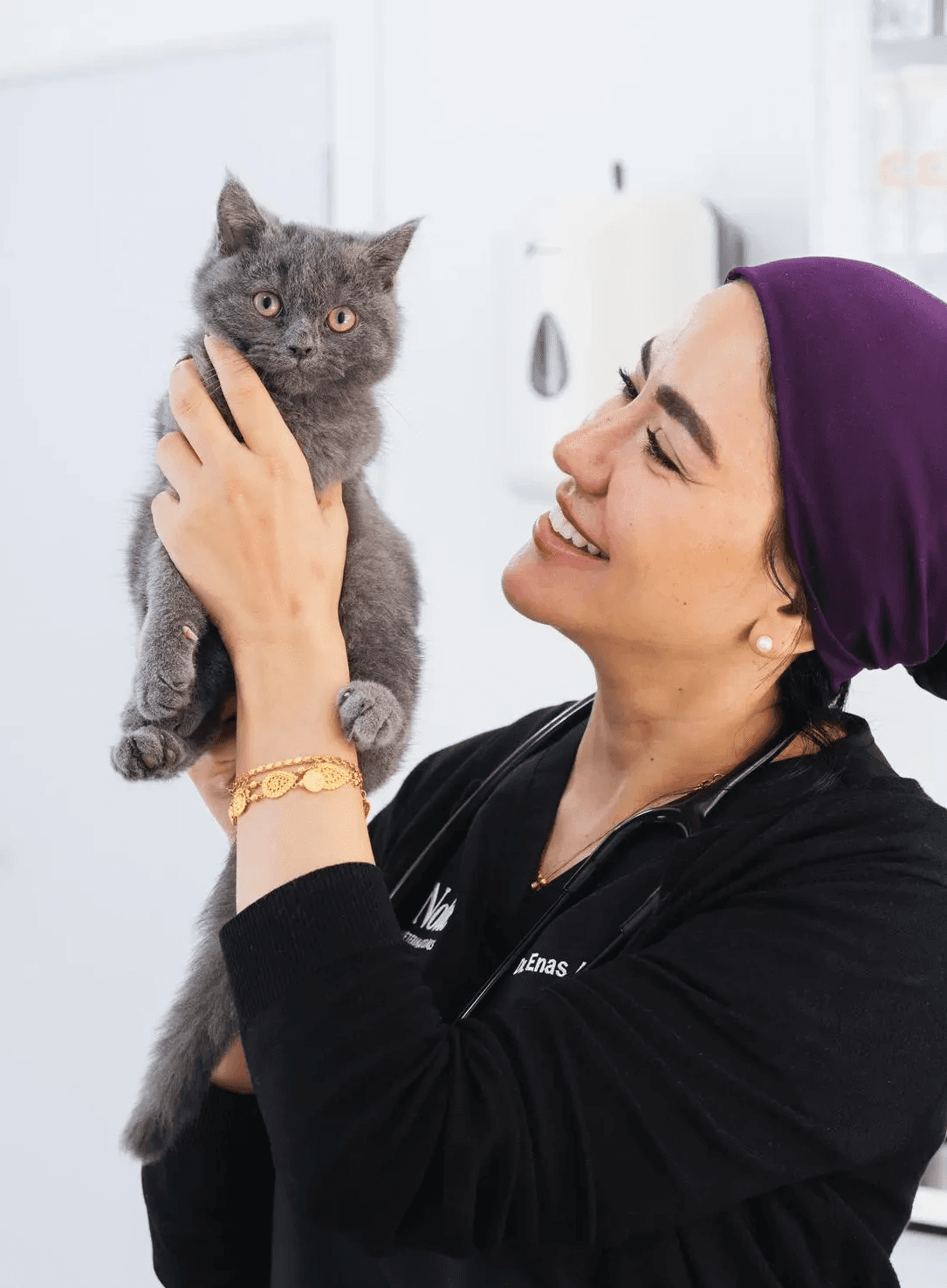
Our Ophthalmology Specialist
Eyes are delicate, and Dr. Enas has spent more than 12 years mastering them. She holds a GPCert in Veterinary Ophthalmology, is currently pursuing her Master's degree with the Royal College, and continues to advance her expertise in diagnosing and managing complex eye conditions.
Dr. Enas brings the added depth of a skilled soft tissue surgeon to every case, from routine eye checks to complex ophthalmic conditions.
Does your pet's eyes need special attention?
Let our eye specialists take a closer look.
Does your pet's eyes need special attention?
Let our eye specialists take a closer look.
Does your pet's eyes need special attention?
Let our eye specialists take a closer look.
Everything You Need to Know
Questions? We're Here to Help
How often should I get my pet's eyes checked?
We recommend an annual eye exam with our specialist ophthalmologist. Seniors and pets with chronic issues may need more frequent checks, about every 6 months.
Are eye exams painful for pets?
No, our eye exams are non-invasive, quick, and painless. We may use numbing drops to keep your pet comfortable throughout the process.
What happens during a vet eye exam?
Dr. Enas will physically inspect the eyes, run any tests needed, and walk you through her findings. If an issue is present, she'll explain what's going on and what treatment looks like.
Are eye surgeries safe for pets?
Yes, eye surgeries are generally safe and common for pets, and are often necessary to restore vision, relieve pain, and help pets get back to their normal lives.
How long does recovery take after eye treatment?
Eye infections typically resolve within 7 to 10 days with proper care. Surgical cases usually take a bit longer, around 10 to 14 days. Either way, keeping your pet secure and comfortable in a safe space during recovery makes a real difference.
How can I prevent eye problems in my pet?
Regular eye exams are the biggest factor, alongside routine grooming, keeping the fur around their eyes trimmed, and maintaining a safe environment at home.
Everything You Need to Know
Questions? We're Here to Help
How often should I get my pet's eyes checked?
We recommend an annual eye exam with our specialist ophthalmologist. Seniors and pets with chronic issues may need more frequent checks, about every 6 months.
Are eye exams painful for pets?
No, our eye exams are non-invasive, quick, and painless. We may use numbing drops to keep your pet comfortable throughout the process.
What happens during a vet eye exam?
Dr. Enas will physically inspect the eyes, run any tests needed, and walk you through her findings. If an issue is present, she'll explain what's going on and what treatment looks like.
Are eye surgeries safe for pets?
Yes, eye surgeries are generally safe and common for pets, and are often necessary to restore vision, relieve pain, and help pets get back to their normal lives.
How long does recovery take after eye treatment?
Eye infections typically resolve within 7 to 10 days with proper care. Surgical cases usually take a bit longer, around 10 to 14 days. Either way, keeping your pet secure and comfortable in a safe space during recovery makes a real difference.
How can I prevent eye problems in my pet?
Regular eye exams are the biggest factor, alongside routine grooming, keeping the fur around their eyes trimmed, and maintaining a safe environment at home.
Everything You Need to Know
Questions? We're Here to Help
How often should I get my pet's eyes checked?
We recommend an annual eye exam with our specialist ophthalmologist. Seniors and pets with chronic issues may need more frequent checks, about every 6 months.
Are eye exams painful for pets?
No, our eye exams are non-invasive, quick, and painless. We may use numbing drops to keep your pet comfortable throughout the process.
What happens during a vet eye exam?
Dr. Enas will physically inspect the eyes, run any tests needed, and walk you through her findings. If an issue is present, she'll explain what's going on and what treatment looks like.
Are eye surgeries safe for pets?
Yes, eye surgeries are generally safe and common for pets, and are often necessary to restore vision, relieve pain, and help pets get back to their normal lives.
How long does recovery take after eye treatment?
Eye infections typically resolve within 7 to 10 days with proper care. Surgical cases usually take a bit longer, around 10 to 14 days. Either way, keeping your pet secure and comfortable in a safe space during recovery makes a real difference.
How can I prevent eye problems in my pet?
Regular eye exams are the biggest factor, alongside routine grooming, keeping the fur around their eyes trimmed, and maintaining a safe environment at home.
Everything You Need to Know
Questions? We're Here to Help
How often should I get my pet's eyes checked?
We recommend an annual eye exam with our specialist ophthalmologist. Seniors and pets with chronic issues may need more frequent checks, about every 6 months.
Are eye exams painful for pets?
No, our eye exams are non-invasive, quick, and painless. We may use numbing drops to keep your pet comfortable throughout the process.
What happens during a vet eye exam?
Dr. Enas will physically inspect the eyes, run any tests needed, and walk you through her findings. If an issue is present, she'll explain what's going on and what treatment looks like.
Are eye surgeries safe for pets?
Yes, eye surgeries are generally safe and common for pets, and are often necessary to restore vision, relieve pain, and help pets get back to their normal lives.
How long does recovery take after eye treatment?
Eye infections typically resolve within 7 to 10 days with proper care. Surgical cases usually take a bit longer, around 10 to 14 days. Either way, keeping your pet secure and comfortable in a safe space during recovery makes a real difference.
How can I prevent eye problems in my pet?
Regular eye exams are the biggest factor, alongside routine grooming, keeping the fur around their eyes trimmed, and maintaining a safe environment at home.
Pet Ophthalmology
Ensuring Bright and Healthy Eyes for Your Pet

Pet Ophthalmology
Ensuring Bright and Healthy Eyes for Your Pet
Pet Ophthalmology
Ensuring Bright and Healthy Eyes for Your Pet

Guided by Passion,
Backed by Veterinary Excellence

Services
Contact Us
DIP - 8am to 9pm
JLT - 10am to 7pm
Jumeirah - 8am to 8pm
Sports City - 9am to 7pm
Sustainable City - 9am to 6pm


© 2006-2026 Noble Veterinary Clinics
A Member of ARENA Veterinary Group
Contact Us
DIP - 8am to 9pm
JLT - 10am to 7pm
Jumeirah - 8am to 8pm
Sports City - 9am to 7pm
Sustainable City - 9am to 6pm
© 2006-2026 Noble Veterinary Clinics
Guided by Passion,
Backed by Veterinary Excellence
Contact Us
DIP - 8am to 9pm
JLT - 10am to 7pm
Jumeirah - 8am to 8pm
Sports City - 9am to 7pm
Sustainable City - 9am to 6pm
© 2006-2026 Noble Veterinary Clinics
A Member of ARENA Veterinary Group

Why work at Noble!
