15 Common Dog Eye Problems: Causes, Symptoms, and Treatments

15 Common Dog Eye Problems: Causes, Symptoms, and Treatments
15 Common Dog Eye Problems: Causes, Symptoms, and Treatments

Dr. Nenad Misura

Published Date

Published Date

10 minutes

10 minutes

Custom Icon
Custom Icon
Custom Icon
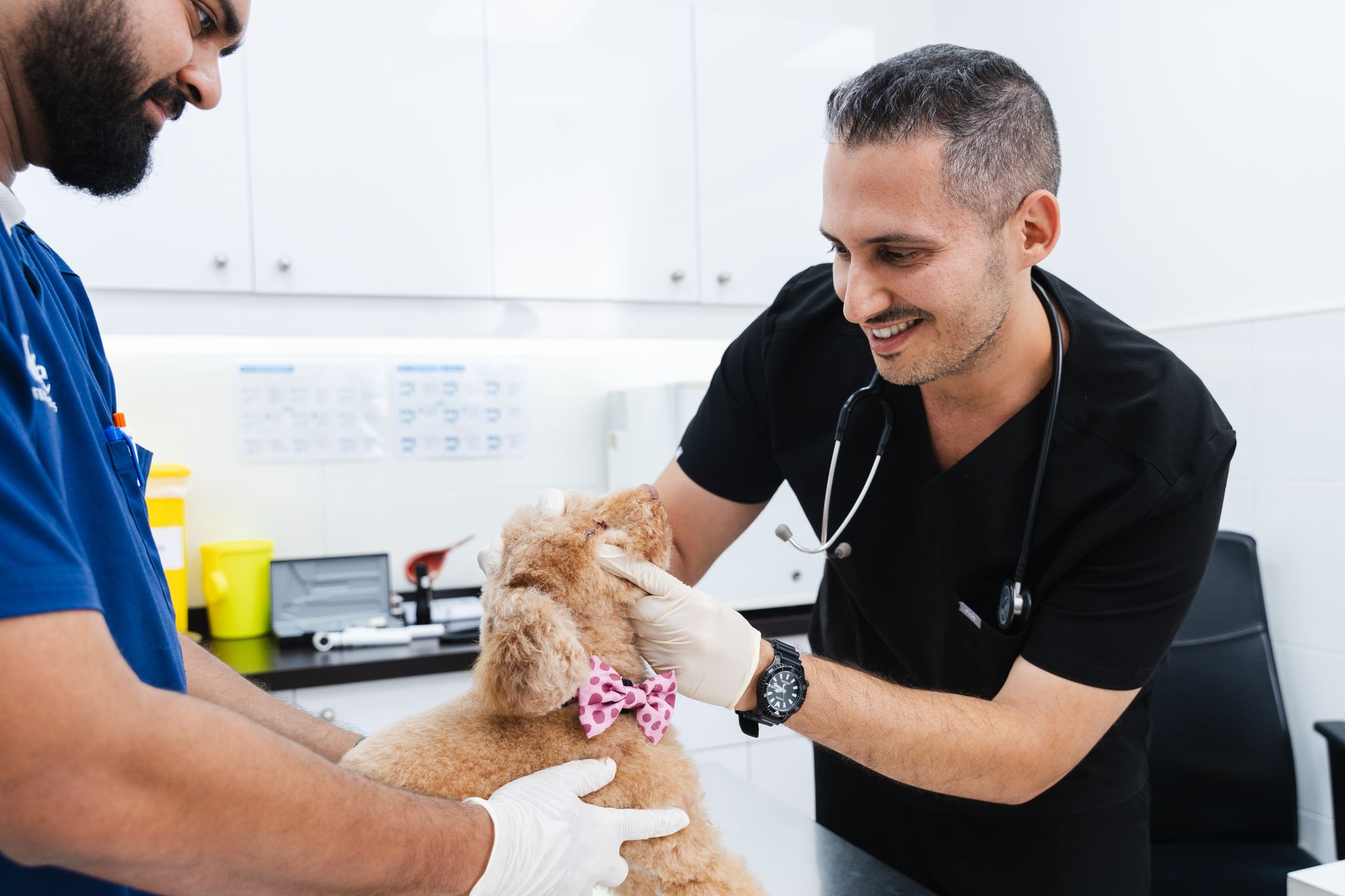
A veterinarian is hugging a brown dog that is standing on a metal table.

Dogs rely on their vision for everything: playing, eating, and hanging out. Unfortunately, there are a lot of problems that get in the way of their vision. Some of these are mild and easy to treat, while others can be more challenging to deal with. 

The one thing they have in common is that once they start, they should never be left alone. This guide is here to give you a glimpse of the common dog eye problems and what you can expect. With this, we can give you clues on what to do and how to help your dog. 

  1. Conjunctivitis

Conjunctivitis is the inflammation of the thin layer that spans the white part of the eye, known as the conjunctiva. It’s also known as pink eye due to the symptoms it presents. 

This dog eye problem is mostly caused by bacterial and viral infections, but it can also be triggered by allergies and irritants. Plus, other eye issues in dogs, like entropion or ectropion, can contribute. 

Dogs prone to conjunctivitis are mostly those with flat faces like Pugs, Bulldogs, and Shih Tzus. Common signs include: 

  • Red and swollen eyes

  • Water, yellow, or green discharge

  • Frequent blinking or squinting

  • Sensitivity to light

  • Pawing or rubbing the eyes

Treatment will focus on specific medications and lubricating eye drops. If the issue stems from the structure of the eyelid or a foreign body, then surgical correction may be required. 

  1. Cataracts

Cataracts occur when the normally clear lens of the eye becomes cloudy. Because of this cloudiness, light will have a harder time reaching the retina. This obstructs a dog’s vision.

Canine cataracts can develop from several reasons, including genetics, age, diabetes, eye trauma, and poor nutrition. Breeds prone to this dog eye problem include Cocker Spaniels, Poodles, Boston Terriers, and Siberian Huskies. Symptoms include: 

  • Cloudy or grayish eyes

  • Changes in pupil size

  • Increased clumsiness and accidents 

  • Hesitation when going to unfamiliar spaces

  • Trouble seeing in dim light

The main method for treating this dog eye problem is surgery, specifically phacoemulsification. This works by breaking down the cloudy lens and replacing it with a new one. While surgery carries risks, it has a high chance of success. Medications will be used for recovery. 

  1. Cherry Eye

A dog’s eye is similar to a human’s in structure. This includes the cornea, lens, retina, iris, pupils, and optic nerve. However, they have something unique as well, which is the third eyelid, also called the nictitating membrane. 

When this third eyelid pops out and slips out of place, it looks like a red, fleshy lump in the corner of the dog’s eye. This is cherry eye.

Cherry eye is usually caused by a weakness in the connective tissue that holds the third eyelid in place. Factors include genetics, age, inflammation, trauma, infections, and allergies. Dogs prone to cherry eye include English Bulldogs, Beagles, American Cocker Spaniels, and Cane Corsos

Signs include: 

  • A red or pink lump on the corner of the eye

  • Eye irritation and discomfort

  • Excessive tearing or watery eyes

  • Pawing and rubbing at the eyes

  • Mucus discharge

Surgery is the main method for treating cherry eye in dogs. This dog eye problem can be solved by repositioning the third eyelid while preserving its function. This means creating a small pocket for the third eyelid to fit into and then securing it in place. 

  1. Glaucoma 

Glaucoma is a serious condition in which the fluid in the eyes builds up, leading to increased intraocular pressure. This increase in pressure inside the eyes can damage the optic nerve and retina, potentially causing blindness. 

Canine glaucoma can be primary or secondary. Cocker Spaniels, Basset Hounds, and Beagles are common examples of inherited glaucoma. Other triggers include uveitis, lens luxation, cataracts, tumors, and trauma. The signs of glaucoma in dogs include: 

  • Excessive squinting and blinking

  • Cloudy or bluish cornea

  • Redness in the white part of the eye

  • Excessive tearing and discharge

  • Bulging or enlarged eye

For treatment, our goal is to relieve the pain and lower the pressure inside the eyes. This will make use of topical eye drops and oral drugs. If these are not enough, we can proceed to more invasive procedures, such as cyclophotocoagulation and drainage implants. 

  1. Dry Eye

Dry eye, or keratoconjunctivitis sicca, happens when the dog’s tear glands don’t produce enough tears to keep the eyes lubricated. When this happens, their eyes become vulnerable to irritation, infections, and injury. 

The most common cause of dry eye in dogs is an autoimmune disorder. This dog eye problem can also be caused by congenital issues, medications, nerve problems, infections, and injuries. Breeds prone to dry eye include English Bulldogs, Yorkshire Terriers, and Cocker Spaniels.

Signs include:

  • Redness and swelling

  • Thick, sticky discharge

  • Frequent squinting or blinking

  • Rubbing or pawing at the eyes

  • Cloudy appearance of the eyes

Dry eye generally requires lifelong management and care. This will involve medications to stimulate tear production and keep the eyes moist. Common examples include cyclosporine and tacrolimus. 
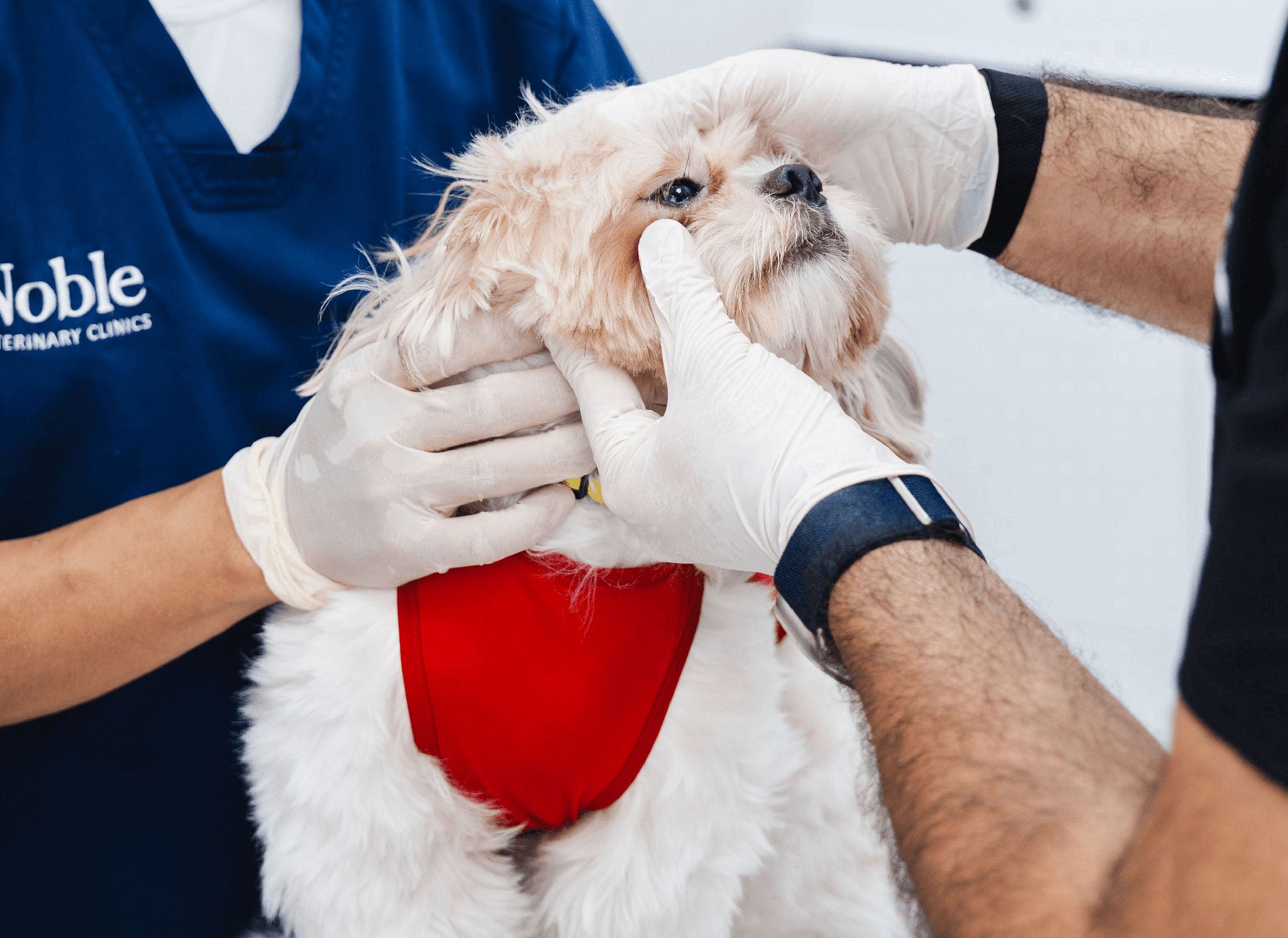
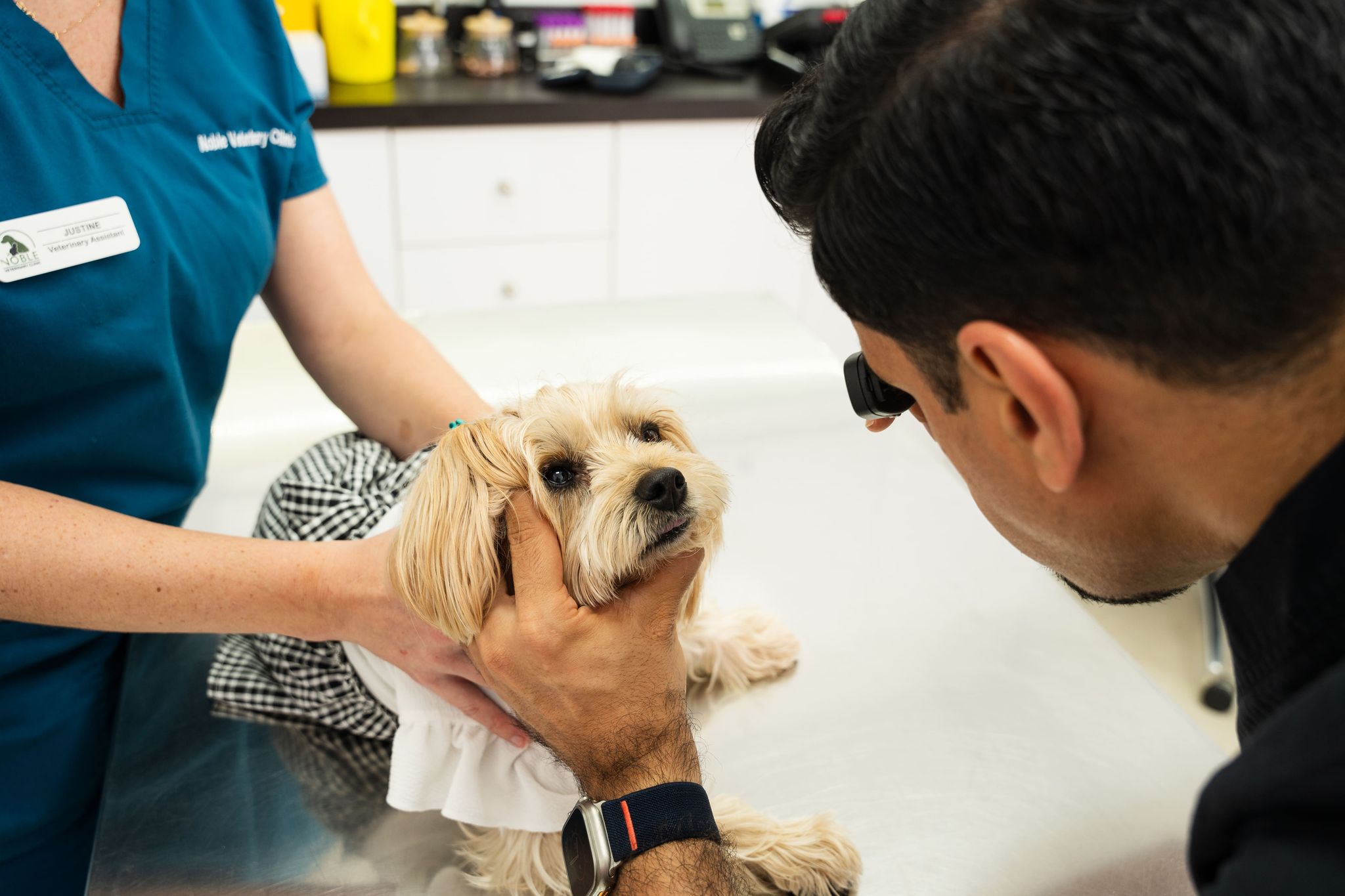
A veterinarian is holding a dog's eyes up to check their condition. Another vet is holding the dog to keep it stable.
  1. Entropion

Entropion is a dog eye problem in which the eyelid rolls inward, causing the eyelashes to rub and touch the cornea. This constant friction can irritate the eyes, causing pain, tearing, and ulcers. If not corrected, it can cause permanent eye damage.

This dog eye problem is mostly an inherited condition, but it can also develop later in life because of eye infections, injuries, and nerve damage. Dogs prone to entropion include Saint Bernards, Chow Chows, and Bloodhounds. Signs include:

  • Excessive tearing or watery eyes

  • Frequent squinting and blinking

  • Redness and inflammation

  • Visible eye irritation and pain 

  • Pawing or rubbing at the eyes 

Treating entropion will require surgical correction, notably the Hotz-Celsus procedure. Here, the eyelids are reshaped and corrected so they no longer roll inward. Supplementary treatments will include pain meds and lubricating eye drops. 

  1. Corneal Ulcers

A corneal ulcer is an open sore or wound on the cornea, the clear outer layer of the eye that helps focus vision. Because the cornea is so sensitive, ulcers are painful and can quickly worsen if untreated, sometimes leading to scarring or even vision loss.

Corneal ulcers are usually caused by scratches and foreign bodies. Sometimes, they can be caused by eye infections, long-term dry eye issues, and chemical irritation. Breeds prone to corneal ulcers include Pugs, Bulldogs, and Boston Terriers. Common signs of this dog eye problem are: 

  • Redness or swelling around the eye

  • Excessive tearing and discharge

  • Frequent squinting or blinking

  • Pawing or rubbing at the eye

  • Sensitivity to light

Treating corneal ulcers will involve the use of antibiotic eye drops and pain relief medications. Severe cases may require surgical intervention, such as corneal grafting.

  1. Progressive Retinal Atrophy

PRA is a degenerative eye condition in dogs in which the retina is gradually damaged. The retina is the part of the eye responsible for capturing light. The more it gets damaged, the more likely dogs are to experience vision loss and blindness. 

PRA usually develops over time and is genetic. This is more common in purebred dogs such as Cocker Spaniels and Labrador Retrievers. Signs include:

  • Night blindness

  • Dilated pupils

  • Increased clumsiness and accidents

  • Hestiance or disorientation

  • Eye shine 

There’s no known cure for progressive retinal atrophy, as management techniques focus on helping dogs adjust to the blindness. 
Want to protect your dog's eyes?

Want to protect your dog's eyes?

Get the help you need from our vets.

Get the help you need from our vets.

  1. Uveitis

Uveitis is essentially the inflammation of the uvea, the middle layer of the eye. This middle layer includes the iris, ciliary body, and choroid. When this dog eye problem occurs, it can cause blindness and serious damage that must be treated promptly. 

It’s generally caused by infections, trauma, cancer, and immune-mediated diseases. Golden Retrievers are predisposed to this condition. Common signs include:

  • Redness in the eye

  • Squinting and light sensitivity

  • Watery discharge

  • Changes in pupil size

  • Pain and discomfort

Uveitis is treated with anti-inflammatory medication, pain relief, and targeted treatments depending on the cause. 

  1. Ectropion

Ectropion is a condition in which the eyelid rolls outward, exposing the inner surface and the eye itself. This exposure can result in severe irritation and pain when not properly protected. 

This is a congenital condition, which means that some dogs are born with it. It’s common in dogs with heavy, loose skin. This includes Bloodhounds, Saint Bernards, and Basset Hounds. The symptoms are: 

  • Sagging lower eyelid

  • Chronic eye irritation

  • Watery eyes and discharge

  • Tear stains

  • Rubbing or pawing at the eyes

Treatment for ectropion is surgery, specifically blepharoplasty, a procedure that tightens the eyelid and prevents it from sagging. Supportive care and management will complement this. 

A veterinarian is holding a dog's face and examining its eyes. Another vet is holding the dog gently.
  1. Lazy Eye

Also known as strabismus, lazy eye is a condition that happens when the dog’s eyes are not properly aligned, as one of them may be turned inward, outward, or downward. This can affect how the eyes work together.

This can be congenital or develop later from nerve damage, trauma, or neurological problems. Common breeds affected by this include Pugs and Boston Terriers. The signs include:

  • Misaligned or wandering eyes

  • Vision and navigation issues

  • Increased clumsiness

  • Reluctance to move

  • Apparent blindness in one eye

For a lazy eye that’s inherited, there’s no cure, as it doesn’t affect the dog’s vision or quality of life. For those with underlying causes, common treatments include medication, surgery, and supportive care. 

  1. Epiphora

Epipora refers to a dog eye problem characterized by excessive tearing in dogs, causing them to overflow onto the face instead of draining normally. This often results in the tear stains around their eyes. While it may appear harmless, it often indicates another eye problem in dogs. 

Excessive tearing can be due to blocked tear ducts, eyelid abnormalities, allergies, infections, or irritation. This is common in breeds with short snouts and big eyes, including Shih Tzus and Bulldogs. Common signs include: 

  • Excessive tearing and discharge

  • Tear staining

  • Irritation and pain

  • Redness or inflammation

  • Rubbing and pawing at the eyes

Addressing the cause is often the main treatment for this eye condition, which may make use of medications, flushing, daily cleaning, or surgery. 

  1. Eyelid Tumors

Eyelid tumors are growths on a dog’s eyelids, with most being benign. While these aren’t always cancerous, the lump can irritate the eye if they hit the cornea. 

These growths are often age-related, with the exact cause being unknown. The symptoms usually revolve around: 

  • Visible growths

  • Inflammation and redness

  • Pawing or rubbing at the eyes

  • Ulceration and bleeding of the mass

  • Squinting and frequent blinking

Treatment usually involves surgical removal and laser ablation. For specific or smaller tumors, cryotherapy and medical management may be used. 

  1. Lens Luxation

Lens Luxation happens when the lens inside the dog’s eye is displaced from its normal position. Since the lens helps focus light into the retina, a displacement can cause problems with overall vision.

This dog eye problem can often be caused by genetic factors, eye trauma, glaucoma, or degeneration of the fibers that hold the lens in place. Breeds such as Jack Russell are prone to this. The signs include:

  • Cloudiness or haziness

  • Pupil changes

  • Enlargement of the eye

  • Squinting and excessive blinking

  • Vision issues

Lens luxation is an emergency situation that requires immediate veterinary care. This may involve a lensectomy, medical management, or enucleation. 

  1. Eye Injury

Eye injuries, such as scratches, trauma, and accidents, can occur in dogs. Because the eye is very delicate, even minor forms of contact can become serious if not treated right away. 

These often come from fights with other animals, contact with sharp objects, blunt force trauma, or debris entering the eyes. This is generally more common in dogs who spend more time outside. Symptoms may include: 

  • Squinting and pawing at the eye

  • Redness or cloudiness

  • Excessive tearing or discharge

  • Pain and discomfort

  • Confusion or difficulty navigating

Treatment for mild cases will include pain medications, antibiotics, flushing, and an E-collar to prevent rubbing. For advanced cases, surgical intervention may be required.

A veterinarian is holding the dog's face to check its eye condition. Another vet is holding the dog's body steadily.

Vet Tips: How to Prevent Dog Eye Problems

Regular care and attention go a long way in preventing eye problems in your dogs. To help you, here are some tips on preventing dog eye problems:

  1. Clean Your Dog’s Eyes 

Gently wipe away dirt and debris from your dog’s eyes using a soft cloth or a vet-approved eye wipe. This is important if your dog is always playing outside. 

  1. Schedule Eye Exams

Visits to our clinic can allow our pet ophthalmologists to give your dog’s eyes a quick exam. From here, we can catch your dog’s eye problems before they start to cause trouble. 

  1. Trim the Hair Around the Eyes

The fur around the eyes may poke in your dog’s eyes and transfer debris. If these get too long, be sure to give them a quick trim to protect their eyes and give them unobstructed vision. 

“Protect your dog from all the eye problems and they’ll keep their eyes on you.”

- Dr. Nenad Misura

Final Thoughts

Your dog’s eyes are essential to its well-being, and being proactive about dog eye health can prevent many common eye issues from turning worse. From regular cleaning and grooming to monitoring for signs, your care can make a huge difference. 

Share

Custom Icon
Custom Icon
Custom Icon

Subscribe to Our Newsletter

Sign up for weekly pet health tips and insights from our veterinarians.

Sign up for weekly pet health tips and insights from our veterinarians.

Wellness & Emergency Care

Book Appointment

Worried about your pet?

We’re here for urgent care, wellness checks, or anything in between. 
Get the best Vet care for your pet

© 2006-2026 Noble Veterinary Clinics

Your veterinary practice, always here

© 2006-2026 Noble Veterinary Clinics

© 2006-2026 Noble Veterinary Clinics