Our dogs can experience various eye problems, such as allergies, infections, and injuries. In some cases, conditions can be genetic. One of these is entropion.
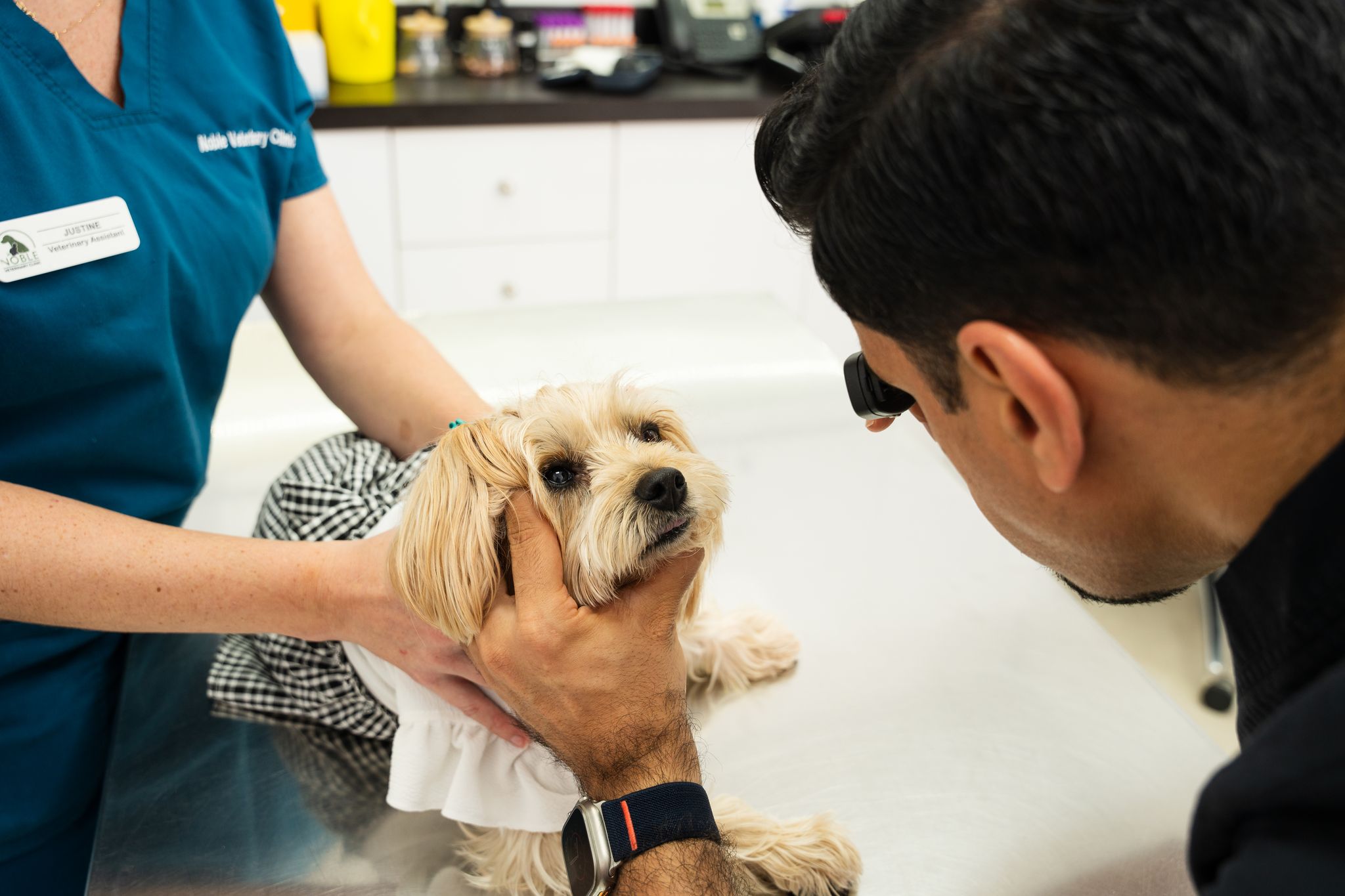
Canine entropion is a condition in which the eyelids turn inward. This makes the eyelashes and fur directly touch the eyes, irritating them. As this goes on, the persistent contact and friction may lead to severe complications.
Our blog provides a detailed overview of everything you need to know about entropion in dogs. With our help, you’ll be able to learn more about one of the many eye problems our best friends face.
Key Takeaways
Canine entropion is caused by breed-related factors, eye and eyelid injuries, chronic eye irritation, nerve damage, and age.
It’s diagnosed through an ocular examination, eye stain test, Schirmer tear test, and numbing drops.
Surgical correction is the main treatment option for entropion in dogs.
What Causes Entropion in Dogs?
Entropion is often caused by inherited traits, structural issues, or physical changes that happen over time, such as injuries and chronic irritation.
Breed Predisposition
Some dogs are genetically predisposed to entropion due to their unique facial features. This includes key traits such as heavy facial folds, prominent eyes, flat faces, and weak eyelid support. Even at a young age, the risk increases. Common breeds affected include:
Cavalier King Charles Spaniel
Boxer
Basset Hounds
Eye and Eyelid Injuries
Trauma or injury to the eyelid and surrounding area causes scarring. This leads to skin tightening and eyelid distortion. Since scar tissue doesn’t stretch like normal skin, it can potentially pull the eyelid into the eye’s surface. Examples include:
Scratching of the eyes
Fights with other animals
Running through shrubbery
Surgical scars
Foreign objects
Chronic Eye Irritation
Other types of eye problems, such as canine conjunctivitis, eye infections, dry eye, and allergies, can trigger canine entropion. Dogs with these conditions often squint, blink, and paw at their eyes excessively.
This leads to chronic irritation and inflammation, causing tension that leads the eyelid to roll inward.
Nerve Damage
Facial nerve damage can also cause entropion in dogs by disrupting the muscles that control eyelid movement. This results in muscle weakness, sagging eyelids, and abnormal eyelid positioning.
Entropion caused by nerve damage often comes with other neurological symptoms, such as uneven facial movement and eyelid drooping.
Age
Entropion in dogs may also be caused by age, also called involutional entropion. This happens when the loss of fat around the eye and the sagging skin lead to the eyelid rolling inward.
What Are the Symptoms of Canine Entropion?
The signs are often similar to other types of eye problems in dogs. These include:
Excessive Tearing. The more the eyelashes and fur touch the eyes, the more irritated they become. This leads to increased tear production, wetness, and tear stains.
Squinting and Blinking. Excessive squinting and blinking are common signs of a painful eye condition, such as entropion. The constant irritation dogs experience causes them to try to shake it away.
Redness and Inflammation. Chronic irritation can cause the eyes and their surroundings to appear red and swollen.
Eye Discharge or Crusting. There might be some mucus, pus, or crust along the eyelids, which may worsen with secondary infections.
Frequent Pawing and Rubbing. Some dogs may instinctively paw at their faces or rub them against objects to relieve discomfort. This can worsen the issue.
Behavioral Changes. The pain from this eye condition can significantly impact your dog’s behavior, personality, and activity levels.
How Do Vets Diagnose Entropion in Dogs?
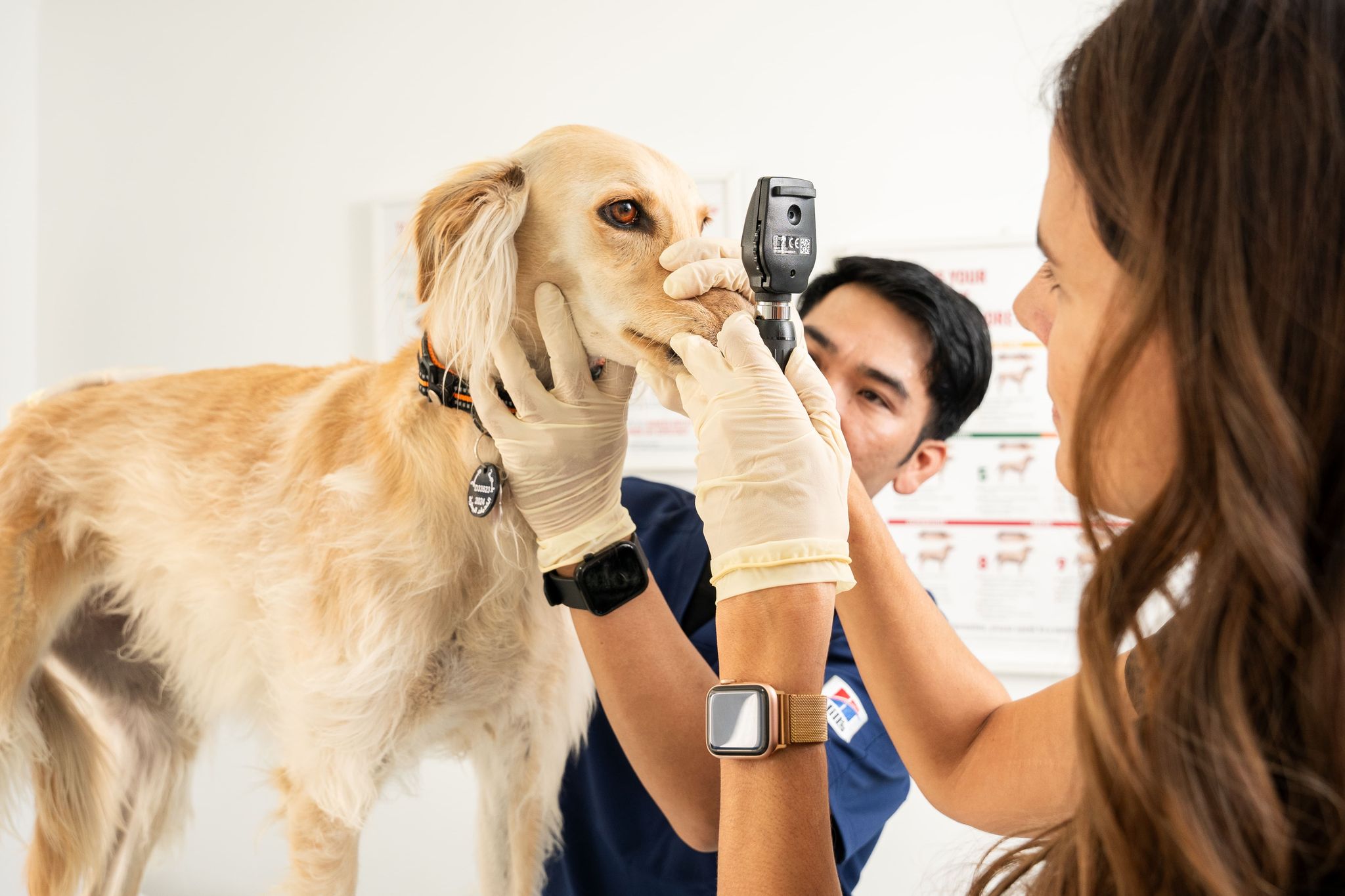
Our pet ophthalmologists will start with an ocular exam, assessing your dog’s symptoms and looking for signs of inward rolling and changes to the cornea, conjunctiva, and other parts of the eye. After that, we’ll proceed to other specific tests.
Eye Stain Test
An eye stain test uses a special yellow-orange dye and blue light to help detect any scratches, injuries, or ulcers on the cornea caused by the inward rolling of the eyelid. These forms of damage will be highlighted in bright green.
Schirmer Tear Test
We may do a Schirmer tear test to examine tear production. A normal-to-high measurement can indicate secondary entropion, as there’s overproduction of tears. The test also helps us verify if the issue isn’t related to dry eye.
Numbing Drops
Numbing drops will also be applied to determine if the condition is anatomical or pain-related. If the eyelid unrolls once the pain is gone, this indicates the latter.

How Do You Treat Entropion in Dogs?
Surgical correction is the main treatment option, with eyelid tracking as an option for younger dogs.
Hotz-Celsus Procedure
Surgical correction is the most effective long-term fix. It works by removing a small section of skin, usually in a crescent shape parallel to the eye margin. This is then stitched to reposition the eyelid outward, preventing any hair from rubbing against the eyes.
Eyelid Tracking
For puppies with entropion, a milder treatment option should be considered. We may place temporary sutures that help keep the eyelid in a much more normal position. This helps the eyelids develop properly as the puppy grows and avoids damage.
Recovery and Management
Before or after surgery, we may provide lubricating drops to protect the cornea, antibiotics for secondary infections, and pain relief to ease discomfort. An E-collar is crucial to prevent dogs from pawing or rubbing their eyes.
What Is the Prognosis for Dogs With Entropion?
The good news is that the prognosis for dogs with entropion is excellent following surgical correction. For most dogs, a one-time correction is highly effective. Complications are rare, but are still possible during recovery. Follow-up checkups are crucial.
What Happens if Entropion Is Left Untreated?
Untreated entropion can lead to long-term pain and discomfort. Additionally, it may also cause other severe complications, including:
Scarring
Loss of vision
Infections
Chronic pain and discomfort

Vet Tips: How to Prevent Entropion in Dogs?
While it can be breed-related, following these simple tips can help protect your dog's eyes.
Schedule Eye Exams
Wellness exams help us check for the early signs of entropion and other health issues your dog may have. Earlier diagnoses lead to better recovery.
Protect Your Dog's Eyes
Keep your dog away from places that can be dangerous, which include dense shrubbery and unsupervised outdoor spaces with other animals.
Clean Your Dog's Eyes Regularly
Check your dog's eyes weekly, and if you notice any tearing, debris, or discharge, use a soft, damp cloth. Wipe outward from the eye corners.
“Your dog sees the world through their eyes, and protecting them is one of the simplest ways to show our love.”
- Dr. Nenad Misura
Final Thoughts
Entropion is a painful condition in dogs, and certain breeds are significantly more predisposed than others. These dogs require more attentive care and early monitoring to prevent long-term eye damage.
Luckily, entropion can be treated and managed, helping your best friend to enjoy clear, comfortable vision and a better quality of life.
Frequently Asked Questions
Does entropion hurt dogs?
Yes, this is a very painful condition as the eyelashes and fur constantly rub against the cornea. It causes irritation, chronic tearing, and persistent discomfort.
Are there any home remedies?
There aren’t any home remedies that may treat the condition, as surgery is the main option. However, you may use warm compresses, eye lubricants, and cleaning to help provide comfort.
At what age do dogs get entropion?
Canine entropion is usually diagnosed in dogs under 1 year of age. While it can also develop at any age due to other factors, it’s more commonly found in puppies.
Can this correct itself?
Some puppies can outgrow the condition as they develop. However, most cases will require vet procedures. For puppies, temporary sutures will be placed to help correct the eyelid entropion as they grow. For adults, surgical correction will be recommended.
Is entropion common in dogs?
This eye condition is quite common in dogs, especially in brachycephalic breeds and giant breeds with excessive facial folds.
Share
Subscribe to Our Newsletter
Worried about your pet?
We’re here for urgent care, wellness checks, or anything in between.