Breed Overview
Personality: Gentle, patient, affectionate, loyal
36-50 kg (79.4-110 lbs)
Coat Colors: Black and tan, liver and tan, red
Short hair
Coat Patterns: Solid, multicolor
Eye Color: Deep hazel to yellow
10 to 12 years
No
History of the Bloodhound
The Bloodhound has its origins in the early medieval period, when it was bred by monks, particularly those of St. Hubert Abbey in Belgium. The breed was selectively developed for its unmatched scenting abilities, initially used for tracking wild game such as deer. Following this, the Bloodhound was used to track people, particularly criminals.
The breed became so popular and reliable, so much so that people who denied entry to this tracker would be treated as accomplices to the crime.
Over time, the breed gained recognition across Europe and was later refined in England, where it became a staple for police work and search-and-rescue missions. While Bloodhounds were almost pushed to the brink of extinction during the Second World War, they were able to recover after the chaos.
Today, the Bloodhound remains one of the most efficient scent-tracking dogs. They are still being actively used in law enforcement to help find missing persons and catch fugitives.
Physical Characteristics of Bloodhound
Head
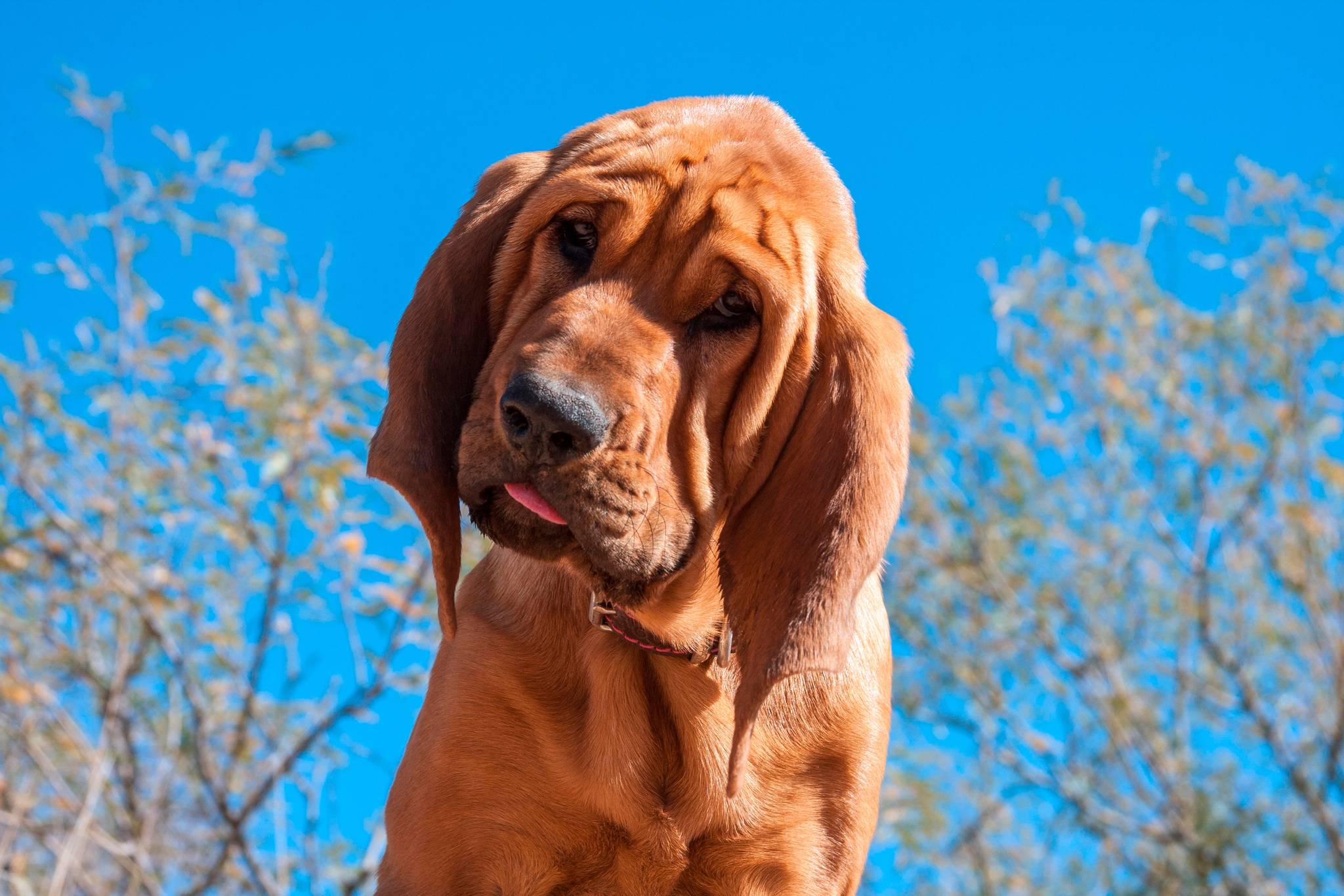
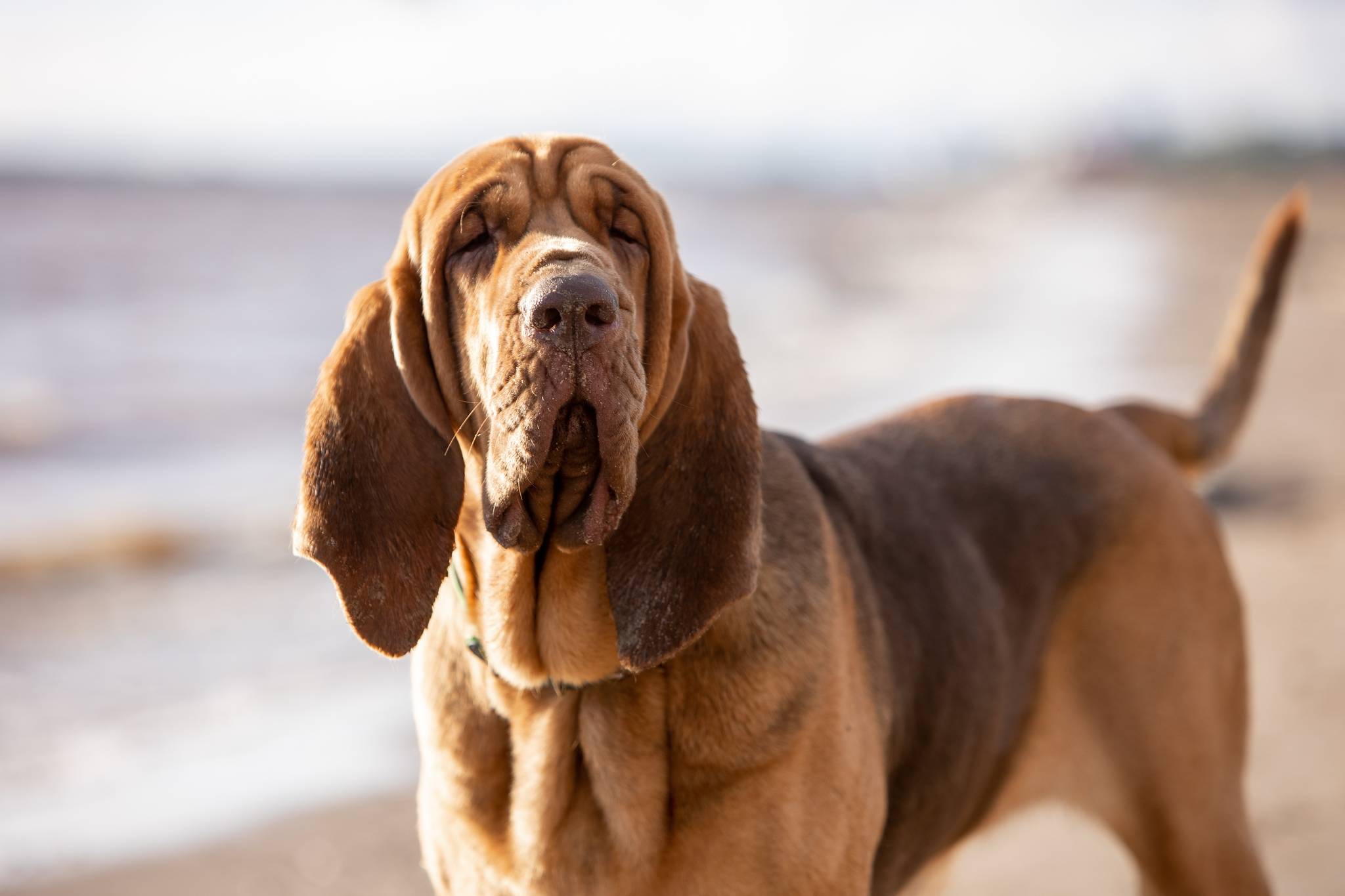
Large, long, and well-defined with a broad skull. They have deep wrinkles, loose skin, and a square muzzle with large nostrils.
Eyes
Eyes are deep-set, medium-sized, and slightly sunken. The color is in shades of hazel to brown.
Ears
The ears are extremely long and low-set, hanging close to the face.
Body
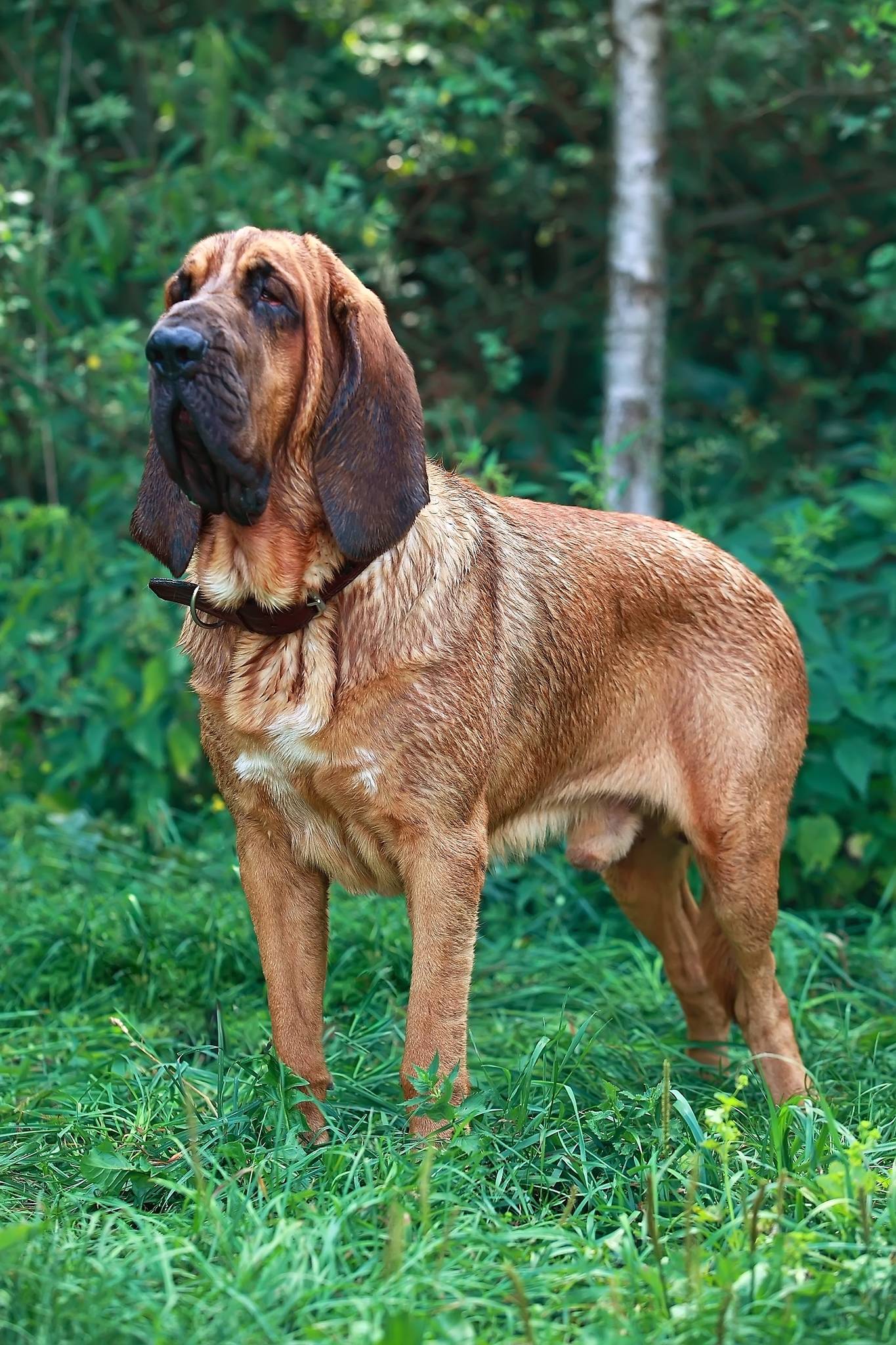
A Bloodhound’s body is muscular and well-proportioned. They have a long back, loose skin forming folds, and a well-sprung ribcage.
Limbs
The legs are sturdy and straight, and the muscles are well-developed.
Tail
Their tail is long, strong, and slightly curved. This tapers to a point.
Coat
Bloodhounds have a short, dense coat that is also weather-resistant and slightly rough. This comes in colors like black and tan, liver and tan, or red.
Size
64-69 cm (25-27 inches), Females: 58-64 cm (23-25 inches).
Weight
41-50 kg (90-110 lbs), Females: 36-45 kg (80-100 lbs).
Just welcomed a Bloodhound
What to Expect With a Bloodhound
Vocalization Level
Bloodhounds are generally vocal, but instead of barking, they use a characteristic deep howl to communicate with their owners and families.
Energy Level
These dogs are energetic dogs who love to exercise and spend time with their owners. They need activities like running and walking to maintain an active lifestyle.
Independence Level
Bloodhounds enjoy companionship but can be left alone for moderate periods without becoming overly distressed. However, they can get bored when left alone for long periods.
Affection Level
They are generally affectionate and gentle, but not too much to the point that they become clingy.
Compatibility with Children
Bloodhounds are generally patient, calm, and playful, making them good companions for children. However, supervision is still recommended.
Compatibility with Other Pets
They typically get along well with other dogs and household pets, especially if introduced early. These dogs can form strong bonds with other pets.
Adaptability Level
Bloodhounds can generally adapt to any living situation as long as their needs are met. All they need in a home is regular exercise, stimulation, and affection.
Trainability Level
Bloodhounds are trainable, but they would require consistency and early training. They can benefit greatly from positive reinforcement, such as treats and praise.
Exercise Requirements
These dogs need at least 2 hours of daily exercise, which involves running, walking, obedience training, and playtime.
Mental Stimulation Needs
Bloodhounds love to engage in scent-based games, interactive toys, and training sessions to fulfill their mental stimulation needs.
Grooming Frequency
With their short coat, Bloodhounds require only occasional brushing to manage shedding. Regular care will be focused on their skin folds and ears.
Health Concerns of Bloodhound
How to Groom a Bloodhound
Coat Maintenance
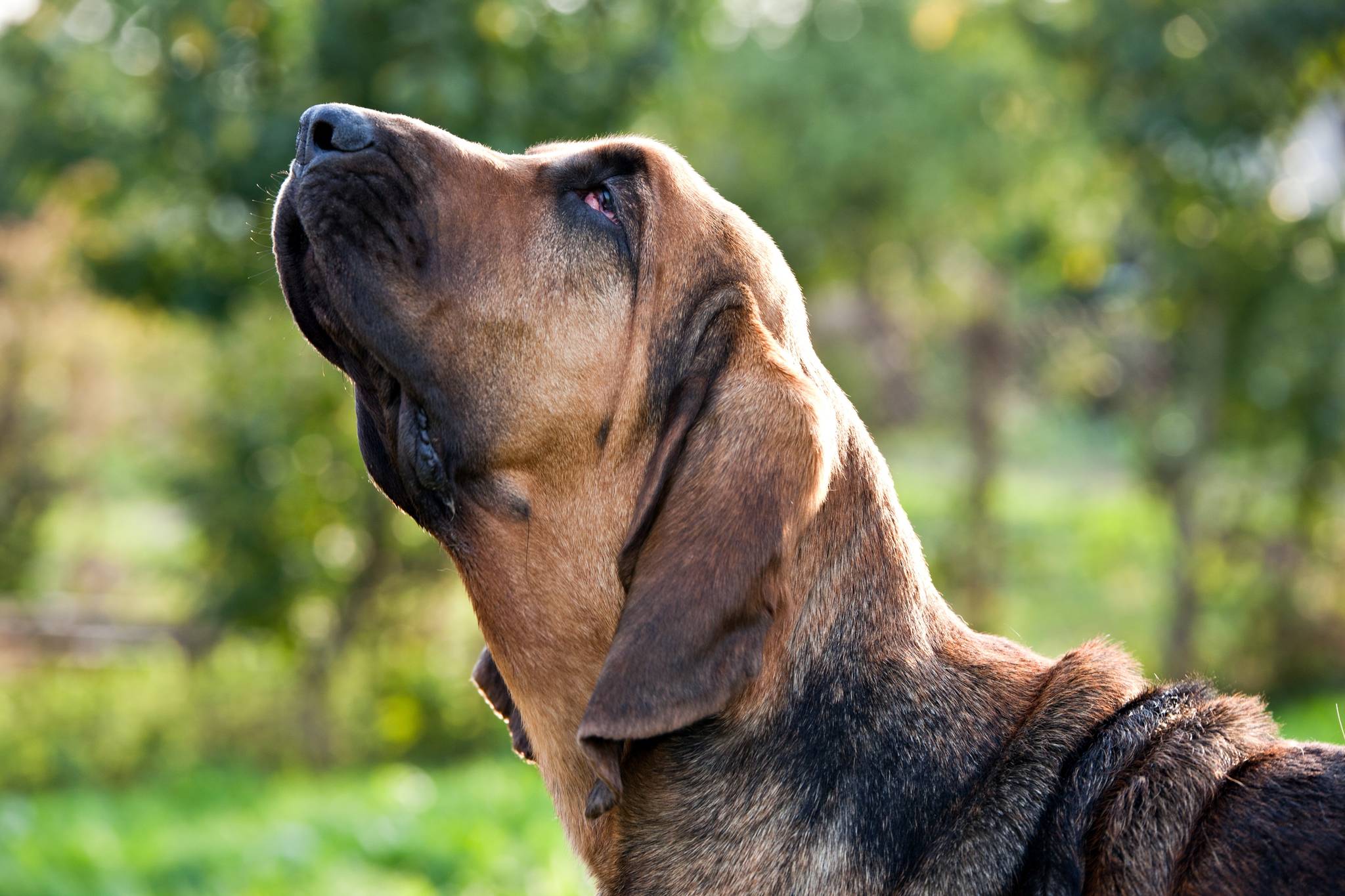
Bloodhounds have a short, dense coat that only needs brushing once or twice a week with a soft-bristle brush.
Skin Health
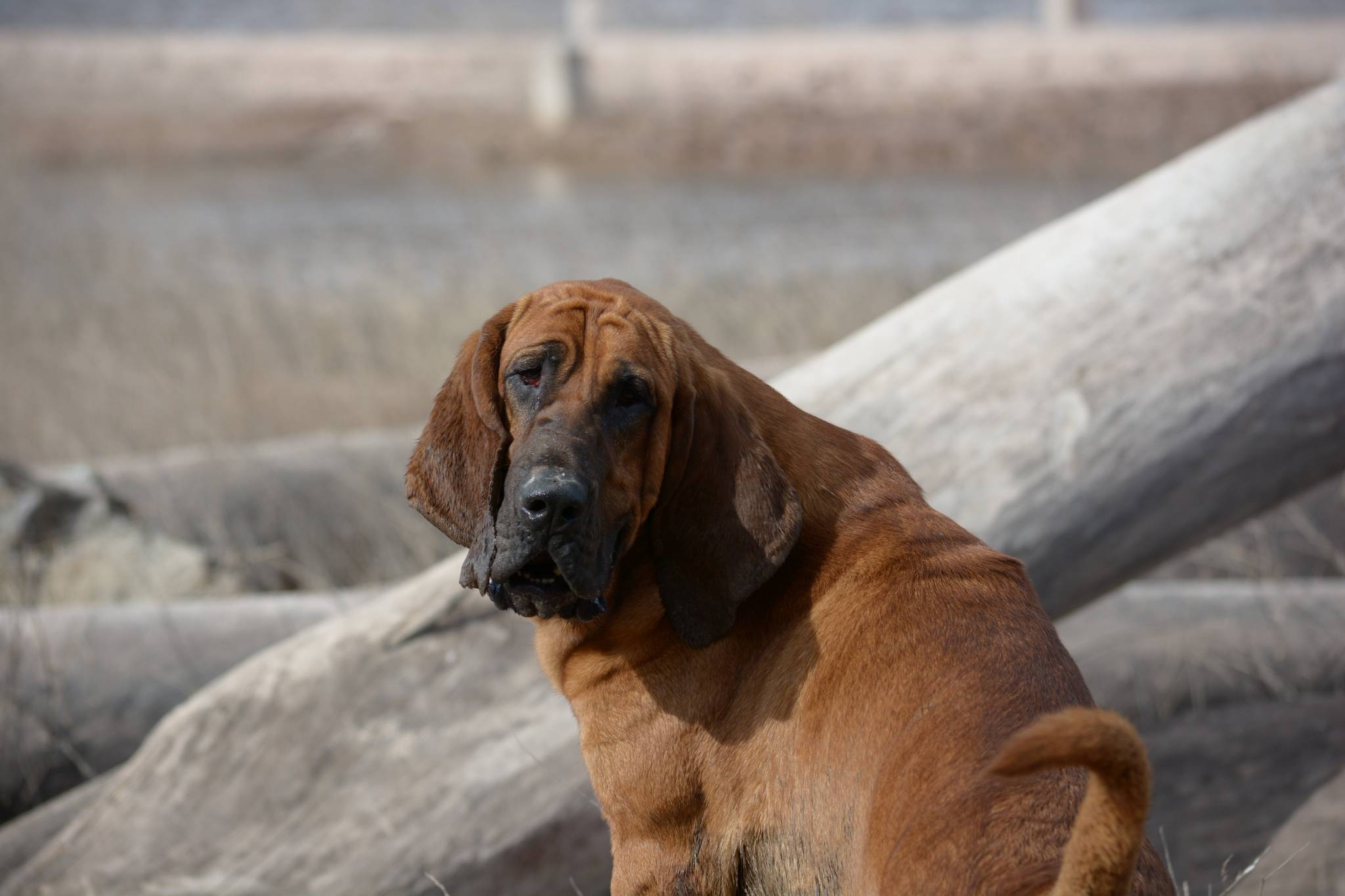
They can be prone to skin issues because of their loose and wrinkled skin. Clean these areas regularly and check on them periodically.
Bathing Routine
Bathing is recommended every 4 to 6 weeks, or until they get noticeably dirty and smelly. Use a vet-approved shampoo and make sure to dry them thoroughly.
Nail Trimming
Nail trimming should be done every 3 to 4 weeks or if the nails have grown too long. Regular trimming helps prevent paw injuries.
Ear Cleaning
Their floppy ears would need weekly cleaning sessions. Use a vet-approved cleaning solution and gently pour it into the ear canal. Wipe the debris away.
Eye Care
Bloodhounds require daily eye cleaning because of their susceptibility to tearing. Use a soft, damp cloth and make sure to wipe outward.
Dental Hygiene
Daily brushing is recommended, but cleaning twice or thrice a week is enough. Use a pet-safe toothpaste and toothbrush.