Can Dogs Eat Strawberries? Benefits and Safe Feeding Tips


Dogs grow and develop through a variety of nutrients, which means a balanced diet is always the way to go.

Key Takeaways
Strawberries are packed with vitamins, minerals, antioxidants, fiber, malic acid, omega fats, and water while being low in calories.
They should be given in moderation due to the sugar content and risk of digestive upset.
Strawberries should be washed, sliced, and prepared correctly before giving them to dogs.
What Are the Benefits of Strawberries for Dogs?
Strawberries make a healthy and refreshing snack that can give your dog a natural boost of essential nutrients.
Vitamins
Vitamin C. Strawberries are rich in vitamin C, helping neutralize free radicals, reduce inflammation, and support faster wound healing. It also strengthens the immune system and helps in collagen production.
Vitamin B1. Vitamin B1 is essential for your dog’s metabolism and brain function. It helps convert food into usable energy, making dogs stay active and alert. Thiamine is an essential vitamin that dogs need in their diets.
Vitamin K. Vitamin K has more of a responsive function, wherein it excels in blood clotting and maintaining overall bone health. This allows dogs to face fewer consequences when getting serious wounds and injuries.
Minerals
Potassium. Potassium can help dogs regulate fluid balance, nerve signals, and muscle contractions. It’s a key mineral for healthy heart and muscle functions.
Magnesium. Magnesium supports consistent muscle and nerve function, while also contributing to protein synthesis and bone health.
Manganese. Manganese is a mineral that helps dogs produce energy and grow stronger, healthier bones. This also supports metabolic functions and aids in synthesising proteins and enzymes needed for your dog’s overall health.
Iodine. Iodine contributes greatly to thyroid hormone production and metabolism in dogs. Thyroid hormones help regulate bodily functions and play a part in their continued functionality.
Antioxidants
Anthocyanins. Anthocyanins are abundant in strawberries and are essential for reducing inflammation and the risk of chronic diseases. These antioxidants are also good for strengthening the immune system and are the reason for the fruit’s red color.
Ellagic Acid. Another antioxidant with anti-inflammatory and anti-cancer properties. It also protects your dog’s cells from damage.
Fiber
Fiber promotes bowel movement and supports the growth of beneficial bacteria in the gut. Good amounts of fiber also provide a feeling of fullness in dogs, helping manage weight.
Low Calories
Strawberries are not only packed with nutrients but are also naturally low in calories. This means that they’re a great snack option for dogs as they’re light and nutritious.
Malic Acid
Strawberries also complement good dental health by containing malic acid, a substance that reduces stains and plaque from your dog’s teeth. However, these shouldn’t replace regular dental care.
Fatty Acids
Omega-3 and omega-6 fatty acids are present in strawberries, but only in small amounts. These healthy fats can promote good skin and coat health, preventing a lot of skin problems in dogs.
Water
Strawberries are made up of 91-92% water, which means they are a nice and refreshing snack for dogs, especially in hot weather.
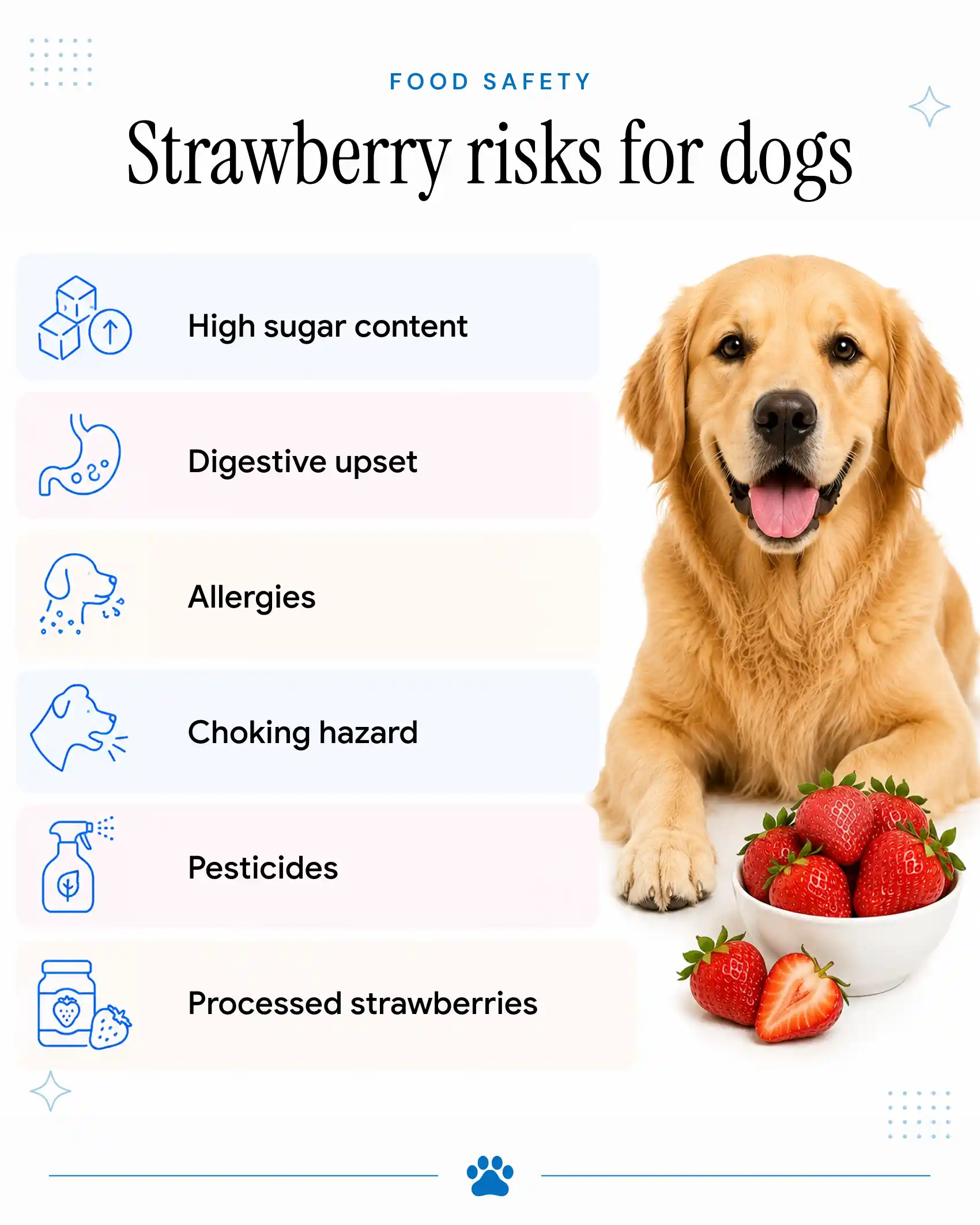
What Are the Risks of Strawberries for Dogs?
Strawberries are healthy, but they can also be bad for dogs in certain situations. These include:
High Sugar Content
Strawberries contain high amounts of natural sugars, which can be dangerous when eaten in large amounts. Too much, and your dog can easily become at risk of dental disease, obesity, and diabetes.
Digestive Upset
When overfed, strawberries can cause gastrointestinal symptoms because of the fiber content. This causes dogs to vomit and experience other issues such as diarrhea, gas, and digestive upset.
Allergies
Food allergies can also be a problem. While it isn’t a common occurrence, dogs can get allergic reactions from strawberries. You’ll notice this if they develop symptoms like digestive distress, skin irritation, and swelling.
Choking Hazard
Some dogs may have difficulty swallowing them whole, which makes them a potential choking hazard. Since dogs tend to be greedy with their food, they would most likely try to gulp it up in one go. Plus, the leaves and stems can be tough to digest, another choking hazard.
Pesticides
Strawberries are typically farmed with the use of pesticides. While the chemicals protect the fruit from pests, dogs can experience digestive issues when they ingest them.
Processed Strawberries
Strawberry products meant for humans are dangerous for dogs. This includes strawberry jam, strawberries with syrup, and strawberry shakes. The high levels of xylitol and sugar are dangerous for dogs.
While processed foods are convenient, they’re not always healthy. Plus, commercial dog food can sometimes be too boring for them. This is where fresh and natural options come into play. One of these safe and delicious options is strawberries. But can dogs eat strawberries?
Dogs can eat strawberries, and they provide a lot of benefits to dogs. However, they do carry some risks when served improperly. But why are strawberries good for dogs? What happens when dogs eat strawberries? We’re going to find out in this guide.

Frequently Asked Questions







Subscribe to Our Newsletter
Worried about your pet?
We’re here for urgent care, wellness checks, or anything in between.