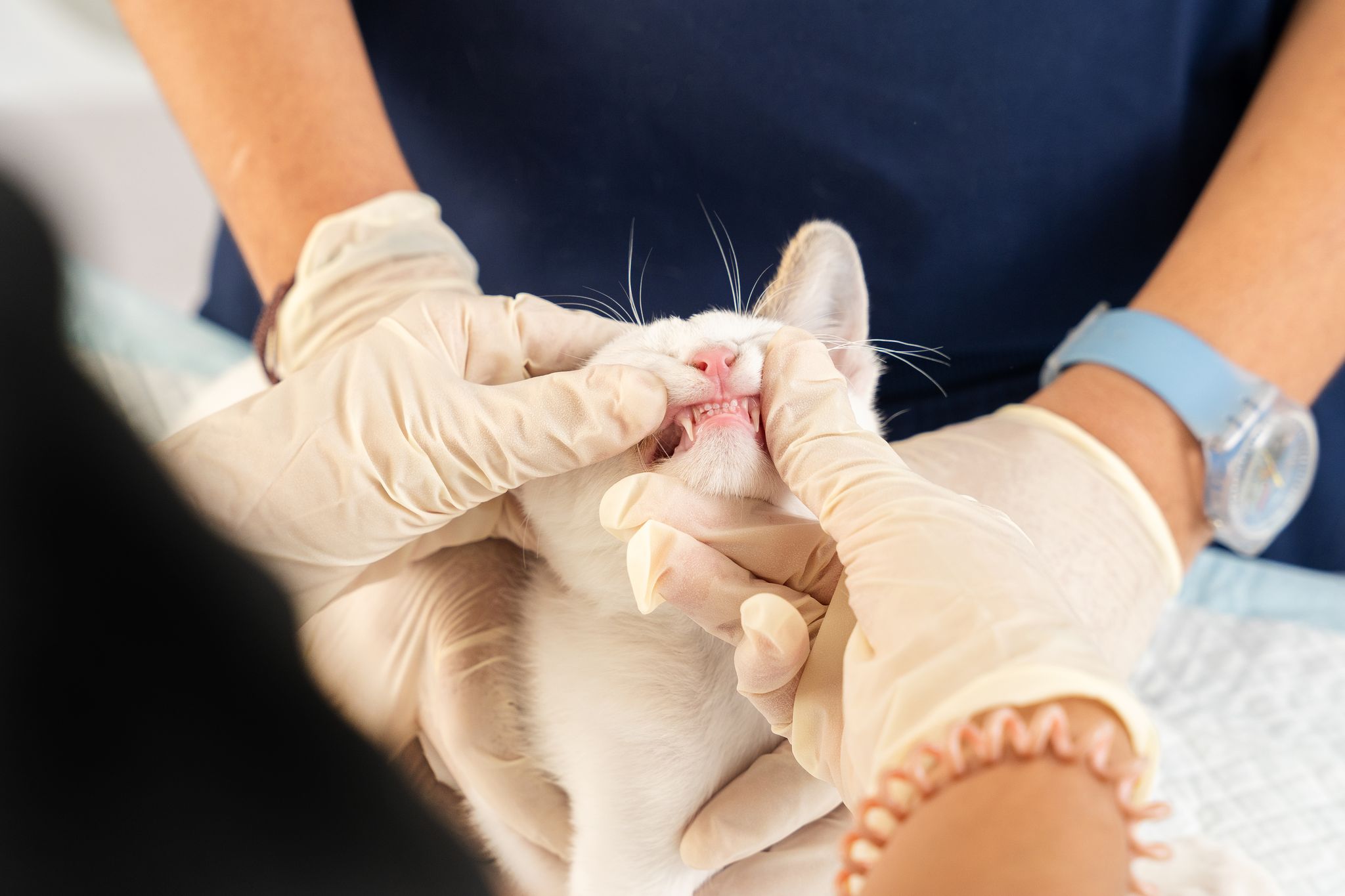
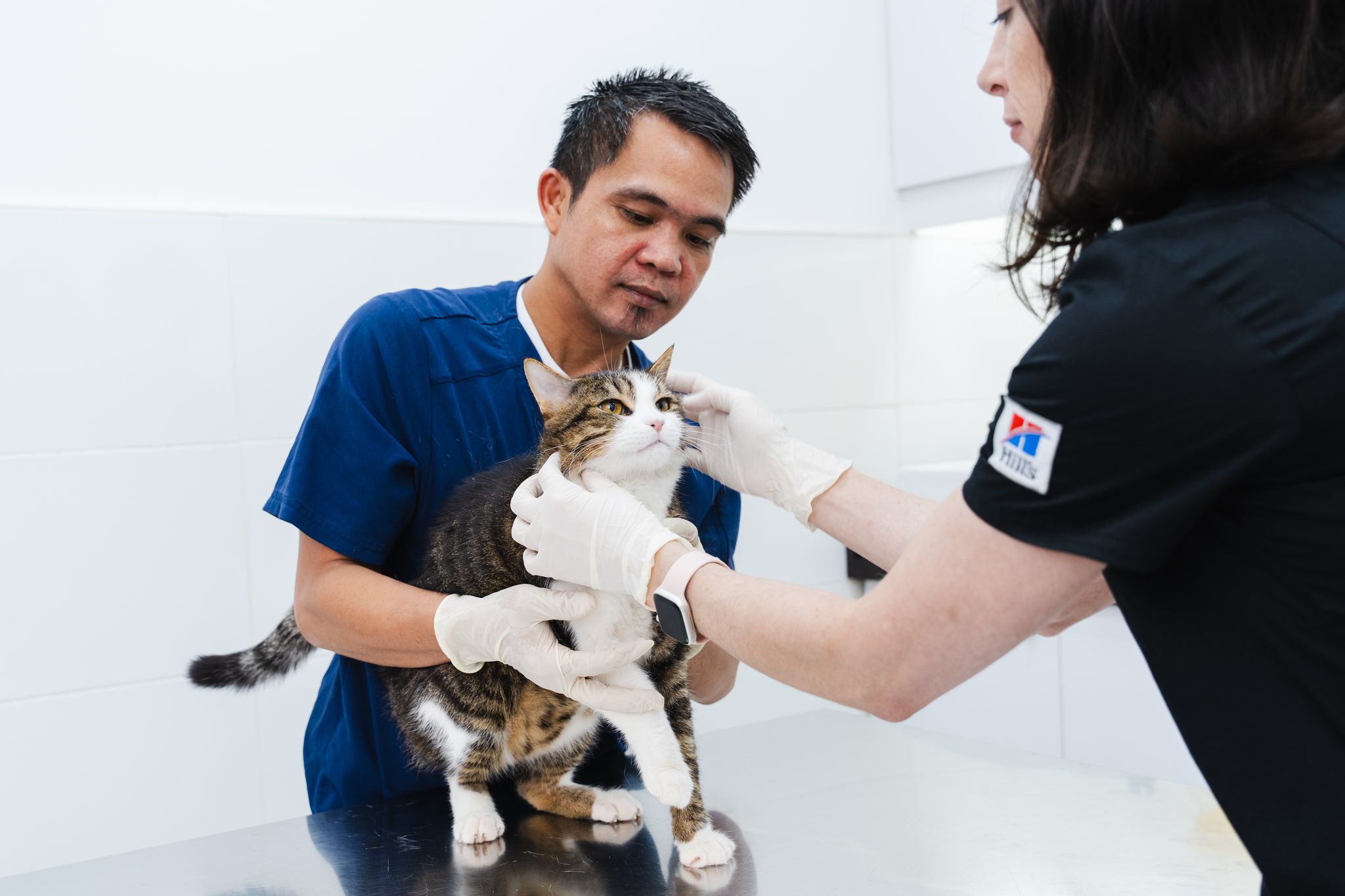
A cat’s oral health is essential for their overall well-being. It’s often overlooked because cats rarely show any form of mouth pain or discomfort. A cat with dental disease may still continue to eat, groom, and even behave somewhat normally.
Key Takeaways
Dental care may be started at 8-12 weeks of age to help kittens get used to the practice and routine.
Our veterinarians recommend brushing daily, but brushing 2-3 times a week is also good.
Professional cat dental cleaning should be done at least once a year. This includes cleaning, checkups, and treatments.
Why is cat dental care important?
Having a good routine significantly benefits cats by preventing severe oral pain, tooth loss, and eating difficulties. They’re also safe from systemic diseases that affect the liver, heart, and kidneys. These may happen when bacteria from the mouth enter the bloodstream.
Good dental care at home also avoids expensive procedures, such as full-mouth extractions. By simply preventing plaque and tartar buildup, you help your cat avoid a significant portion of oral issues.
What is plaque and tartar buildup?
Dental plaque is a sticky film of bacteria, food particles, and saliva that constantly forms on the teeth and gumline. If this isn’t removed regularly through brushing and professional cleaning, it hardens into tartar within 24-48 hours.
This may result in painful oral diseases such as gingivitis and periodontal disease. Tartar is a much more serious problem because it cannot be removed by brushing.

What are the signs of dental disease in cats?
Even though cats may hide pain, there are some obvious signs. Here are the symptoms our veterinarians often find when treating cats:
Strong or persistent bad breath
Yellow or brown buildup on the teeth
Red, swollen, or bleeding gums
Drooling or pawing at the mouth
Chewing on one side while eating
Losing interest in food or play
Loose or broken teeth
Hiding or increased irritability
Swelling around the face or jaw
Seeking professional help is highly recommended once you notice these symptoms.
Cat dental care based on age
The level of care you provide should match your cat’s age and lifestyle. Here’s a quick guide:
Kittens
Kittens need early training and introductions to dental care. The earlier you help them get used to gentle mouth handling, the easier it is to start a brushing routine.
Start by brushing your kitten’s cheeks and lips for a few seconds. Next, use a finger cot and lift the lip to touch the outer teeth. You can also use a toothbrush to introduce them to it. The next step is to introduce them to cat-safe toothpaste.
Adult Cats
Adults need a strong dental routine to manage plaque and tartar buildup. Our veterinarians recommend daily brushing, but a routine of 2-3 times a week is good already. Adult cats will also require annual dental exams and professional cleanings.
Products such as dental treats, rinses, or diets may also be recommended during your visit to the clinic.
Senior Cats
Seniors need closer attention and monitoring because dental disease becomes more common with age. A consistent brushing routine is still recommended at home, but more frequent clinic visits may be scheduled.
Their overall health will also be taken into account because of their age. In some cases, procedures such as tooth extractions may be performed to alleviate the pain.
What is the best way to brush my cat’s teeth?
First things first, you need a cat toothbrush or finger brush and a cat-safe toothpaste. Treats are also recommended to help promote positive associations with this activity.
If it’s your cat’s first time getting their teeth brushed, start with the introductions. Let your cat get used to getting touched around the mouth. After this, add cat toothpaste to your finger and let them lick it. You may also rub a small amount on their teeth. Next, let them meet the toothbrush.
The best way is when they’re comfortable with the routine. Hold your cat on your lap or on a comfortable spot. Gently pull their lip back and place the bristles against the gumline at a 45° angle. Next, use gentle back-and-forth strokes or make circular motions.
Just focus on the outside surfaces of your cat’s teeth and the gumline. There’s no need to brush your cat’s tongue. Aim for just 30 seconds of brushing per side. Lastly, give them a reward so they’ll know that this routine is good.

When is professional cat dental cleaning needed?
We recommend scheduling one dental cleaning session every year. Start the visits when they reach ages 1-2. These sessions allow our vets to fully examine the mouth and address any problems we find.
In the session, our vets may:
Do a full oral exam
Conduct dental probing or radiographs
Manage blood tests
Scale and polish cat teeth
Provide fluoride treatments
Perform tooth extractions or surgery (if needed)
How much does cat dental care cost?
Our dental consultation and oral exam cost AED 288.75. We offer professional dental cleaning and scaling for cats starting at AED 1,300. Tooth extractions, oral surgery, and emergency care will depend on the specific situation.
How our vets grade your cat’s dental health
Grade | Description |
|---|---|
0 (Normal) | The teeth and gums look healthy, with little to no plaque buildup. There is no pain. |
1 (Gingivitis) | There is mild plaque and tartar on the teeth and gumline. Gums are slightly red. This stage is reversible. |
2 (Early Periodontitis) | The tartar is visible, and there is sensitivity. Inflammation is more pronounced. |
3 (Moderate Periodontitis) | Gums are swollen and may bleed easily. Tartar is more noticeable, and gum recession is apparent. |
4 (Advanced Periodontitis) | Loose teeth, bleeding gums, and significant swelling may be present. Tooth roots are heavily compromised. |
“Our cats deserve a chance to experience a life free from dental pain.”
- Dr. Soheyl Simaei
Helping your cat through routine dental care shows how much you care about them. By practicing and staying consistent, you help them stay pain-free. It helps them eat more comfortably, avoid severe oral disease, and maintain better long-term health.
Frequently Asked Questions
Subscribe to Our Newsletter
Worried about your pet?
We’re here for urgent care, wellness checks, or anything in between.