Cat Ticks: Symptoms, How to Remove, and Prevention Tips


Cat Ticks: Symptoms, How to Remove, and Prevention Tips

Cat Ticks: Symptoms, How to Remove, and Prevention Tips

Dr. Mafalda Sardinha

Published Date

Published Date

10 minutes

10 minutes

Custom Icon
Custom Icon
Custom Icon

Our cats deserve our protection, even from the smallest of dangers. Small external parasites may look harmless, but they are highly dangerous. 

A veterinarian is holding a gray cat on a metal table to prepare it for treatment.

In this blog, we're going to talk all about cat ticks, including what they are and how we can prevent them.

What Are Cat Ticks?

Ticks are small, spider-like parasites that feed on the blood of various animals, including cats. Depending on their life stage, ticks have six to eight legs. Adult ticks can resemble tiny spiders because they belong to the same family. 

Unlike fleas, ticks don't jump or fly. Instead, they climb or drop onto your cat's coat when your pet brushes past areas where ticks are waiting, such as tall grass or shrubs. Once on your cat, ticks attach firmly to the skin and feed slowly, often going unnoticed for a considerable time.

While ticks are less commonly found on cats than on dogs, outdoor cats, especially those in rural areas, are at a higher risk of encountering these parasites. Ticks are most commonly seen around the face, neck, ears, feet, and legs of your cat.

What Are the Types of Ticks in Cats?

There are several types of cat ticks, each with their own form of danger.

Brown Dog Tick

These are also called Rhipicephalus sanguineus. While they may prefer dogs, some may latch onto cats occasionally. They spread diseases like ehrlichiosis. 

Lone Star Tick

Known for having a white dog on the back of the adult female, Amblyomma americanum is prevalent in the southeastern and eastern United States. Lone Star ticks can transmit diseases like Cytauxzoonosis, a serious and often fatal condition.

Deer Tick

The black-legged tick, Ixodes scapularis, is common in wooded and grassy areas. Deer ticks are notorious for transmitting Lyme disease and tularemia in cats. Still, they can rarely affect cats.

Two veterinarians are trying to keep a cat calm before checking for ticks.

How Long Do Cat Ticks Live?

Ticks live for about 2 months to 2 years, depending on the exact species and environment. Here’s a quick guide for you:

Life Stage

What Happens

Egg

An adult female lays around 1,000 to 6,000 eggs in the environment. These eggs hatch into larvae in 2 weeks to 2 months. 

Larva

The six-legged larvae attach to a host and start feeding. They may remain attached and feed for about 4 to 6 days. After feeding, they drop off and molt into nymphs. 

Nymph

Eight-legged nymphs find a new host and start feeding. This goes on for about 3 to 5 days. After feeding, they molt into adults. 

Adult

Adults will feed, and females will start laying eggs, restarting the cycle. 

What Are the Symptoms of Cat Ticks?

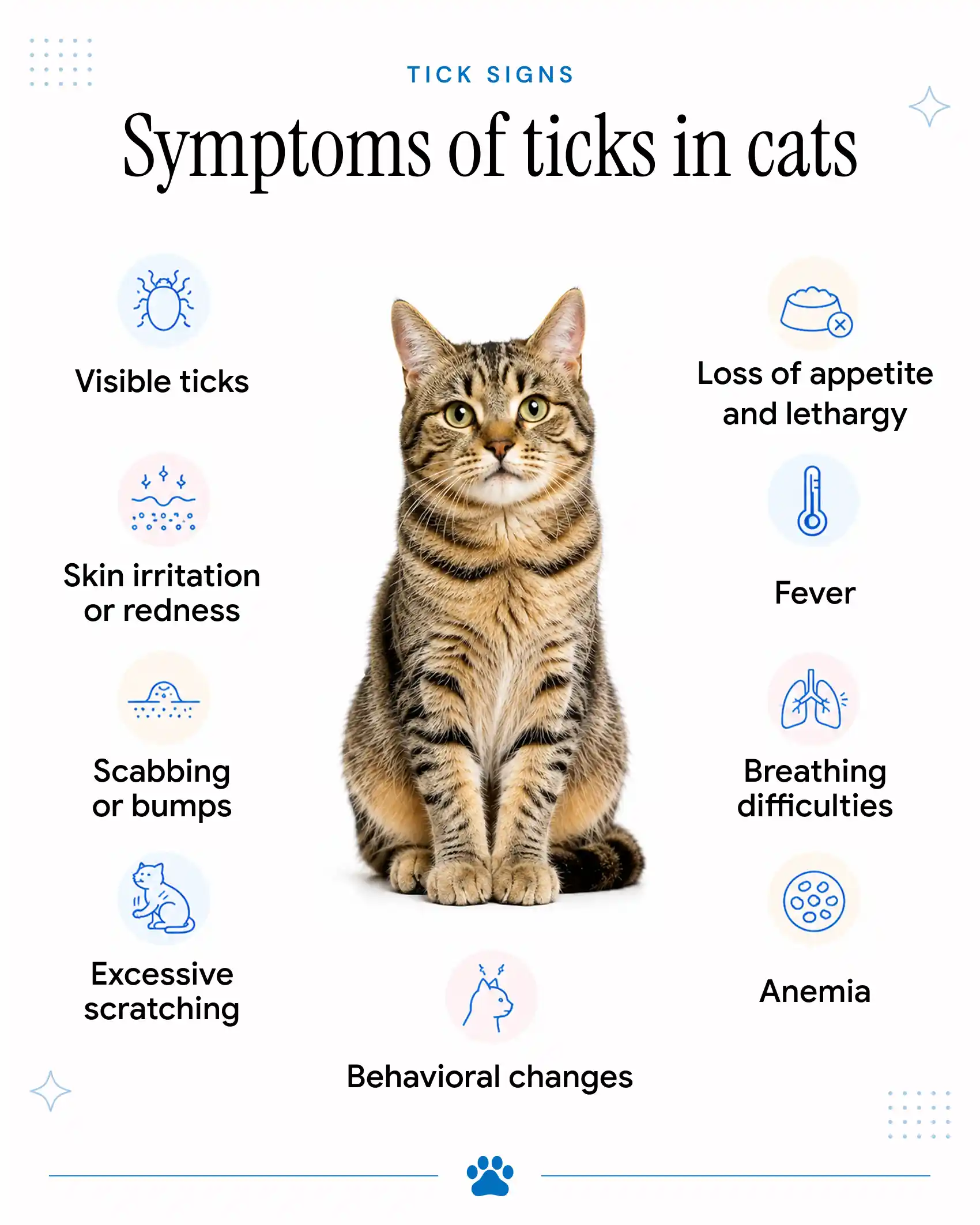
The usual signs of a tick infestation in cats can vary, with most of them manifesting as skin changes. 

  • Visible Ticks. Ticks can look like small, dark bumps on your cat’s skin. They vary in size, appearing larger after feeding. These parasites usually reside on your cat’s ears, toes, base of the tail, and under the chin.

  • Skin Irritation or Redness. As the ticks inject their saliva into the skin, the saliva triggers an inflammatory reaction. This may look red, irritated, and swollen. 

  • Scabbing or Bumps. The site of the tick bite may develop into a scab as the parasite detaches. This is natural, but may indicate a minor infection that feels warm to the touch or produces discharge.

  • Excessive Scratching. Cats affected by ticks tend to scratch or lick the affected areas more often because of the pain and irritation they feel. They may also over-groom areas where ticks have been, leading to hair loss or raw patches of skin.

  • Behavioral Changes. Some cats may appear withdrawn because of the pain and discomfort they feel. You may notice some irritability and restlessness.

  • Loss of Appetite and Lethargy. You might also notice that your cat will not want to eat as much as before. Plus, some cats can appear tired all the time, leading to a reduction in physical activity. 

  • Fever. If a tick transmits a pathogen, the immune system will react by raising body temperature. Your cat's ears may feel warm, while other cats may feel sluggish.

  • Breathing Difficulties. Severe tick infestations and some tick-borne diseases can lead to respiratory distress. Affected cats may have shallow breathing, wheezing, or coughing. These are considered medical emergencies.

  • Anemia. In cases of heavy infestation, ticks can draw enough blood to cause anemia, particularly in kittens or small cats. Signs of anemia are weakness, pale gums, and lethargy. Cats with anemia may also have an increased heart rate as their bodies work harder to circulate oxygen.
Need help with your cat's ticks?

Need help with your cat's ticks?

Let our vets have a look.

Let our vets have a look.

Vet Tips: How to Remove Your Cat’s Ticks

Cat ticks can be easily removed, but you must have the right tools and technique. Here’s a short tick-removal guide to show you how to get started:

Step 1: Gather Your Tools

Start by finding fine-tipped tweezers or a tick removal tool. These are essential for safely grasping and removing the tick. Avoid blunt tweezers, as they can crush the tick. Prepare alcohol, gloves, a pet-safe antiseptic, a towel, and a small container. 

Place the alcohol in the small container. This is where you’ll want to drop the ticks once you’ve removed them.

Step 2: Hold Your Cat Firmly

Ticks latch onto cats, and removing them might give your best friend a small pinch. This is why it’s important to restrain your cats firmly and comfortably. The most efficient way is to ask someone to help hold down your cat securely.

Step 3: Locate the Cat Tick

Find the cat ticks, which are common behind the ears, around the neck, along the tail base, and between the toes. 

You can do this by running your hand across your cat’s coat. Cat ticks usually prefer areas with less fur, so check these areas as well as the common areas. Along these areas, you might feel a bump. Be sure not to press on your cat’s skin.

Cat ticks are visible to the naked eye, and they can be clearer once they have been feeding for too long. You can also gently push the fur side to check every corner of your cat’s skin, but always proceed gently.

Step 4: Remove the Tick

Use fine-tipped tweezers or a tick removal tool to hold the tick as close to your cat’s skin as possible. Avoid squeezing the tick’s body, as its contents might drop on your cat. Apply slow, even pressure to remove the tick. 

Place the cat tick on the container with alcohol. The alcohol will instantly kill the ticks in here, so you won’t have to worry about them anymore.

Once the ticks are removed, inspect the area to be sure no parts of the tick remain. If the head or mouthparts are still embedded, don’t try to remove them. Just wash the area with gentle soap and water, as the body will naturally push it out. If complications arise, bring your cat to the clinic. 

Step 5: Clean the Bite Area

Clean the areas where you found your cat’s ticks after the entire process. Use a pet-safe antiseptic to clean the bite area and to reduce the risk of an infection recurring.

Two veterinarians are talking to a pet owner about her cat's ticks.

How to Prevent Ticks in Cats?

Keeping your cat safe from these parasites takes a few simple steps. This includes preventives, grooming, home cleaning, and limiting exposure.

  1. Use Preventive Products

These preventive treatments can be topical and oral, giving you plenty of options. Spot-on treatments can be easily applied, usually between the shoulder blades, so your cat can’t lick them.

Oral forms are also effective, eliminating ticks from inside. These are generally in a chewable type. However, oral preventives are generally given through a prescription.

Other products, such as flea and tick shampoos, sprays, and powders, are available. Plus, you can also use tick collars that help repel the parasite for a few months. Once you visit the clinic, we can assist you with the most suitable options your cat needs right at our vet pharmacy

  1. Groom Your Cat

Brush your cat at least once or twice a week, with more frequent brushing for long-haired cats. This can help you check for ticks and keep the coat free from dirt, debris, and allergens. If baths are needed, you can use a gentle shampoo. Be sure to dry your cat completely. 

If you choose to have a much deeper clean, our cat grooming services can help you. Through a single visit, your cat can receive a deep clean plus a preventive against ticks. 

  1. Clean Your Home

Always clean your home and keep it free from ticks and other parasites. A good way to do this is to trim your lawn regularly, keeping the grass short. Yard care products are highly effective and helpful. 

  1. Limit Outdoor Exposure

Ticks love to stay in grassy and humid areas. Because of this, it’s important to keep your cat indoors and avoid letting them stay in these areas, especially during tick season. 

“With a little knowledge, we can protect our cats’ smiles and happiness.”

- Dr. Mafalda Sardinha

Final Thoughts

Cat ticks can cause some serious discomfort and pain to your best friend. However, by understanding the right steps to take, you can easily help your cat live tick-free. Regular treatments, grooming, and home cleaning are the best ways to prevent ticks in cats.

Frequently Asked Questions

What to do if a cat has a tick?

If your cat has a tick, remove it. Use specialized tweezers or a tick removal tool to pull the parasite outward with steady motion. Next, place the tick in a container with alcohol and look for more. After finishing, clean your cat and the area.

Do these parasites affect humans?

Yes, cat ticks can affect humans, but they cannot live on them. The ticks can bite people, causing itchy, red, and swollen sores.

How long do they stay on cats?

Ticks can stay on cats for about a week, sometimes more, sometimes less. They drop off when they get enough blood.

What kills ticks instantly on cats?

Vet-approved spot-on treatments, medicated shampoos, and manual removal will effectively kill ticks on cats. For long-term care and management, oral medicines will be needed.

Can a cat survive a tick infestation without treatment?

A cat can survive a tick without treatment if it’s removed early on. When it’s not, the chance of the tick transmitting diseases is very high. Untreated tick-borne diseases can be severe, damaging organs, and even potentially cause death.

Share

Custom Icon
Custom Icon
Custom Icon

Subscribe to Our Newsletter

Sign up for weekly pet health tips and insights from our veterinarians.

Sign up for weekly pet health tips and insights from our veterinarians.

Wellness & Emergency Care

Book Appointment

Worried about your pet?

We’re here for urgent care, wellness checks, or anything in between. 

Get the best Vet care for your pet

© 2006-2026 Noble Veterinary Clinics

Your veterinary practice, always here

© 2006-2026 Noble Veterinary Clinics

© 2006-2026 Noble Veterinary Clinics