Kennel Cough Vaccination in Dubai: Essential Protection


Key Takeaways
While the kennel cough vaccine is not mandatory in Dubai, it is recommended for dogs.
It can be given as a nasal spray, oral liquid, or injection, each with different benefits.
Even vaccinated dogs can still get kennel cough, though symptoms are usually milder.
Some dogs may experience mild side effects from the vaccine, which resolve within 24 to 48 hours.
Summary
Kennel cough is a highly contagious respiratory illness that affects a dog's airway. It's also known as canine infectious tracheobronchitis and canine infectious respiratory disease complex, or CIRDC.
The kennel cough vaccine is an effective preventive measure for dogs at higher risk of exposure. It is often called the Bordetella vaccine because it helps protect against Bordetella bronchiseptica, one of the main bacteria linked to kennel cough. The vaccine is designed to provide protection for around 12 months.
The vaccine is lifestyle-based, meaning it's a non-core vaccine that's recommended by veterinarians based on the dog's risk of exposure.
In a busy city such as Dubai, the kennel cough vaccine is especially important for outdoor and social dogs. While it doesn't guarantee 100% protection, it significantly reduces disease severity.
What the vaccine protects against
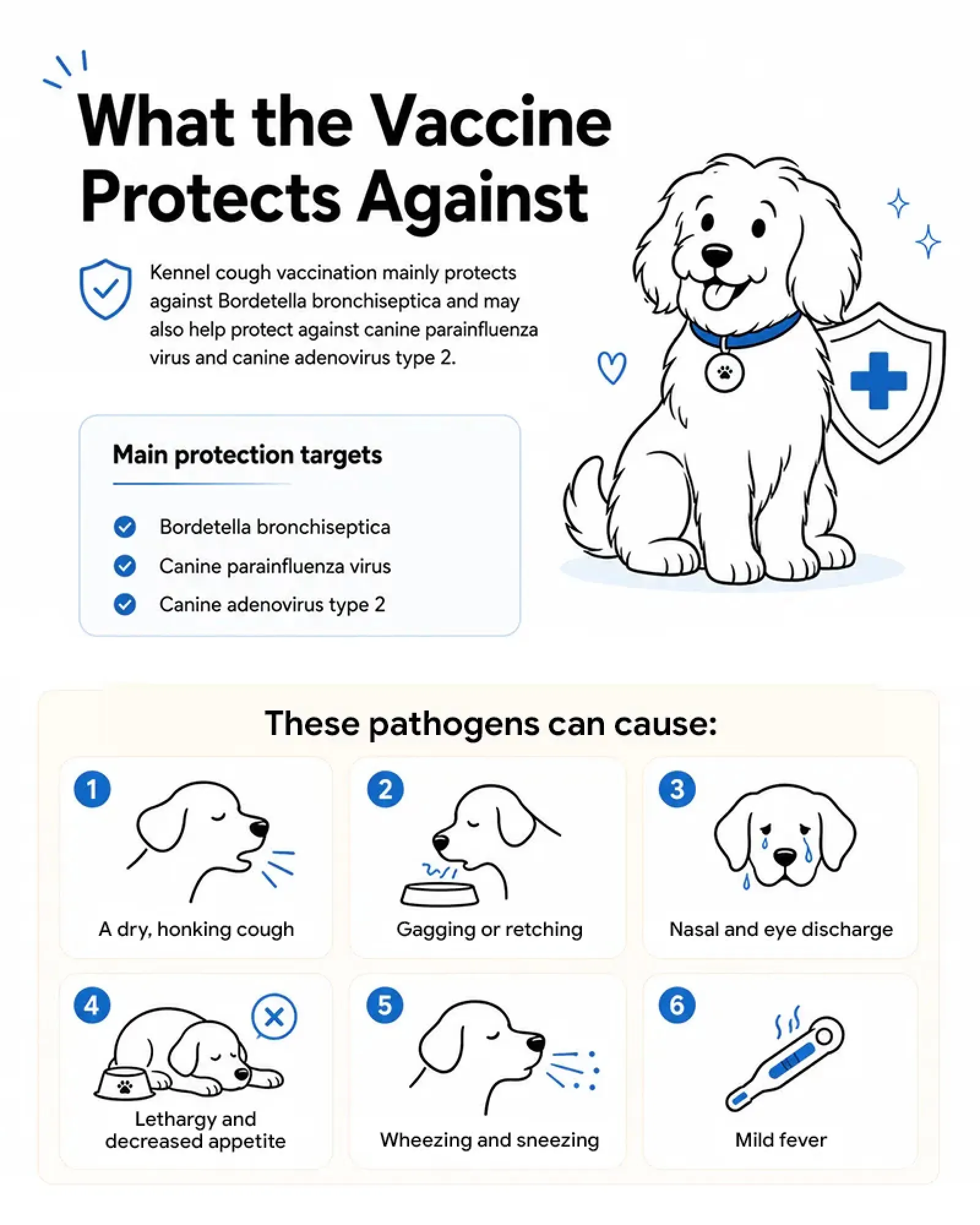
The kennel cough vaccine primarily protects dogs against Bordetella bronchiseptica. Depending on the vaccine used, it may also safeguard dogs against other common respiratory pathogens, such as canine parainfluenza virus or canine adenovirus type 2. These pathogens can cause:
A dry, honking cough
Gagging or retching
Nasal and eye discharge
Lethargy and decreased appetite
Wheezing and sneezing
Mild fever
Most dogs with kennel cough otherwise seem well in themselves; the cough is often the only obvious sign. Puppies, senior dogs, dogs with existing health issues, and brachycephalic breeds (like French Bulldogs, Pugs, and Boston Terriers) are more likely to develop complications if the infection progresses.
When is the Bordetella vaccine needed?
Dogs need it before social activities.
The need is not decided by age alone. Our vets may recommend it for dogs more likely to visit boarding facilities, grooming salons, dog parks, training grounds, and other places where dogs gather.
In Dubai, many pet care facilities require proof of Bordetella vaccination before accepting a dog to prevent potential outbreaks and to protect the pets in their care. If you are planning to have your dog stay at a daycare, we recommend vaccinating them 7-14 days before the planned stay.
This is because kennel cough is common in places where dogs are in close contact with one another.
Kennel cough primarily spreads when an infected dog coughs, sneezes, or barks, releasing respiratory droplets into the air and shared items. Transmission also occurs when dogs play, nuzzle, or lick each other's noses and mouths.
Kennel cough vaccination schedule
Puppies can receive the Bordetella vaccine at 6-8 weeks of age. Adults will require annual boosters, while those in high-risk areas will need a booster every 6 months.
Let us know about your plans with your dog's activities so we can coordinate a vaccination schedule that works for both of you.
Vaccine types
The kennel cough vaccine comes in intranasal, oral, and injectable forms.
Intranasal
These are given as drops or sprays into the dog's nose. Because it is delivered directly to the upper respiratory tract, it can help stimulate mucosal immunity in the area where an infection may begin.
This option may be recommended for dogs that need faster protection before social activities. Protection may begin within 48-72 hours after administration.
However, the intranasal vaccine may result in mild nasal irritation. Additionally, some dogs may not tolerate the process well, as they might dislike having liquid placed in their nose.
Oral
The oral vaccine is given as a small amount in the space between the dog's teeth and inner cheek. It's designed to stimulate protection near the upper respiratory tract. This is another effective option that provides quick immunity, often taking 3-5 days to reach full effect.
Many dogs tolerate this type of kennel cough vaccine better than the intranasal form, especially since it doesn't involve the nose. Because it doesn't use needles, it avoids the pinch of an injection, though some dogs still find the process a little uncomfortable, they may drool, spit out part of the dose, or resist having liquid placed in their mouth.
Injectable
The injectable vaccine is given as a subcutaneous shot, meaning it's applied beneath the skin. This option may be recommended if your dog doesn't like being held by the nose or mouth. It also avoids the mess of nasal and oral application, ensuring your dog receives the exact dosage.
However, dogs will require two initial doses spaced 2-4 weeks apart. It also takes 7 days or more after the second dose for the vaccine to be fully active.
Possible side effects and risks
Side effects are usually mild and temporary.
Most dogs tolerate the kennel cough vaccine well. Some may develop mild side effects such as lethargy, reduced appetite, and soreness at the injection site. If administered through a nasal spray, some dogs may experience sneezing or a runny nose.
These often resolve naturally on their own within 24-48 hours.
An extremely rare side effect is anaphylaxis, which involves facial swelling, breathing difficulties, hives, and collapse. If you notice any of these symptoms, contact our vets for emergency care as soon as possible.
What if my dog gets kennel cough anyway?
No vaccine covers every strain, so a vaccinated dog can still catch kennel cough, though usually a milder case. Here's what to expect if it happens.
How it's diagnosed
There's no single test for kennel cough. Our vets usually diagnose it based on symptoms and whether your dog has recently been around other dogs. In more complicated cases, we may run additional tests to rule out other causes or check for complications.
How it's treated
Most dogs recover on their own within two to three weeks, though it can occasionally linger up to six. We may prescribe antibiotics if a bacterial infection is confirmed, along with cough suppressants or anti-inflammatories to ease symptoms. A harness instead of a collar helps avoid extra strain on an already irritated throat, and your dog should stay away from other dogs until the cough has fully cleared.
When to bring your dog in straight away
Most cases are manageable at home once you've spoken to us, but loss of appetite, ongoing lethargy, or laboured breathing can mean the infection is progressing and is worth an urgent visit rather than waiting it out.
Can it happen more than once?
Yes. There are multiple strains of kennel cough, so previous infection doesn't guarantee future protection. Natural immunity to the Bordetella strain specifically tends to last around 6 to 12 months.
Tips from our vets
If you plan to let your best friend stay at a dog boarding facility, we recommend starting their protection. Plan your dog's kennel cough vaccine with our vets and tell us all about their stay and activities.
Before boarding or daycare, make sure your dog is healthy and shows no signs of illness. Disinfect shared items such as food and water bowls, toys, and bedding if you have multiple dogs.
Through a healthy diet, regular exercise, and low-stress environments, you can strengthen your dog's defences. Plus, regular grooming should be observed.
The kennel cough vaccine is highly effective at protecting dogs that love to visit daycares, dog parks, and grooming salons. Safeguarding their health with routine care goes a long way in securing their health and happiness.
Frequently Asked Questions





Subscribe to Our Newsletter
Worried about your pet?
We’re here for urgent care, wellness checks, or anything in between.