Cat spaying and neutering is a popular surgical procedure we always recommend to pet owners. This safe and simple routine gives cats a multitude of benefits, improving their health and your quality of life.

Essentially, it’s a routine procedure that removes the cat’s reproductive organs, which means they won’t be able to produce offspring or go into heat. Spaying is for females, while castration is the term for males. Both are called neutering.
In females, the ovaries and uterus are removed, while the testicles are removed in male cats. In this blog, we’re going to talk all about cat spaying, including all the benefits and ins and outs of the procedure.
Why Is Spaying a Cat Important?
Spayed cats enjoy many benefits for their physical, mental, and behavioral health. It also contributes to public safety and helps reduce cat overpopulation in Dubai. Below are the many benefits they experience.
Health Benefits
Prevents life-threatening diseases. Spaying prevents diseases associated with the ovaries and uterus because they are completely removed.
Reduces the risk of mammary tumors. Breast cancer is a dangerous and malignant disease. If the procedure is done before the first heat cycle of cats, spaying can reduce the risk of mammary tumors by up to 90%.
Prevents unwanted pregnancy. Spaying a cat prevents any unwanted pregnancies and other complications that come with giving birth to kittens.
Decreases the risk of injuries and fights. Spayed cats are much less likely to roam outside and encounter stray animals, effectively reducing the chances for fights, falls, and accidents to occur.
Provides a longer and healthier life. Because diseases and accidents are prevented, neutered cats will be able to live full and healthy lives.
Mental and Behavioral Benefits
Makes cats calmer. Spayed cats are generally calmer and relaxed due to the absence of heat cycles altering their behavior.
Reduces aggression and anxiety. Neutered cats are also less anxious, stressed, and aggressive toward other animals and people. This decreases the chances of fights with other cats and pets.
Decreases roaming and mating behavior. Spaying a cat decreases their urge to roam and go outside to seek potential mates.
Reduces spraying behavior. Cats in heat generally spray to mark territory. Neutering them will significantly decrease this behavior, making the home cleaner.
Community Benefits
Reduces the stray population. By spaying cats, the population can be controlled. It also helps in tackling the overcrowding issue that most pet shelters and rescue organizations face.
Prevents the spread of disease. Unspayed cats have an increased risk of uterine infections that can be easily spread to other cats. Spaying them completely reduces the risk of spreading.
Helps shelters and rescue groups. Rescue and rehoming efforts are expensive, especially since they include feeding, vaccinating, and caring for cats. By spaying cats, cat rescue organizations will have decreased costs.
At What Age Should a Female Cat Be Spayed?
We recommend having your cat spayed around 5 to 6 months old, before its first heat cycle. That said, the ideal age can vary based on your cat’s health, breed, and lifestyle. These factors will be considered during the initial checkup prior to the surgery.
Can a Newly Neutered Cat Impregnate?
Yes, newly neutered male cats can still impregnate a female for up to 6 weeks following the surgical procedure. This is because residual sperm remain in the reproductive tract, which means that the cat is still fertile during this window.
Plus, there will also be some residual hormones that make a newly neutered cat exhibit mating behaviors. Because of this, a neutered male cat must be kept separate from females to avoid accidental litters.
Can Neutered Male Cats Still Spray?
Yes, neutered male cats can still spray, although the urge is significantly reduced. While cat spraying is linked to mating behaviors, there are other reasons why cats do it. This includes marking territory, stress and anxiety, and certain medical conditions.
Vet Tips: How to Prepare for the Cat Spaying Surgery
When you decide to spay your cat, our vets will guide you in preparing your best friend.
Have Your Cat Checked
Spaying a cat needs to include some tests, including blood tests and a physical exam. These help us make sure your cat gets a smooth surgery.
Prepare Your Cat
Withhold food and water for 6 to 8 hours before the procedure, or as advised by the vets. This reduces the risk of vomiting and other complications.
Put Together a Recovery Space
Prepare a comfortable resting space for your cat before leaving for the clinic. This ensures that your cat has the space to recover and heal.
Bring the Essentials
Bring a secure carrier and a couple of its favorite toys and blankets for the trip to the clinic. It’s best if it’s something your cat usually uses to make it feel comfortable and less agitated before spaying.
The Process of Spaying a Cat
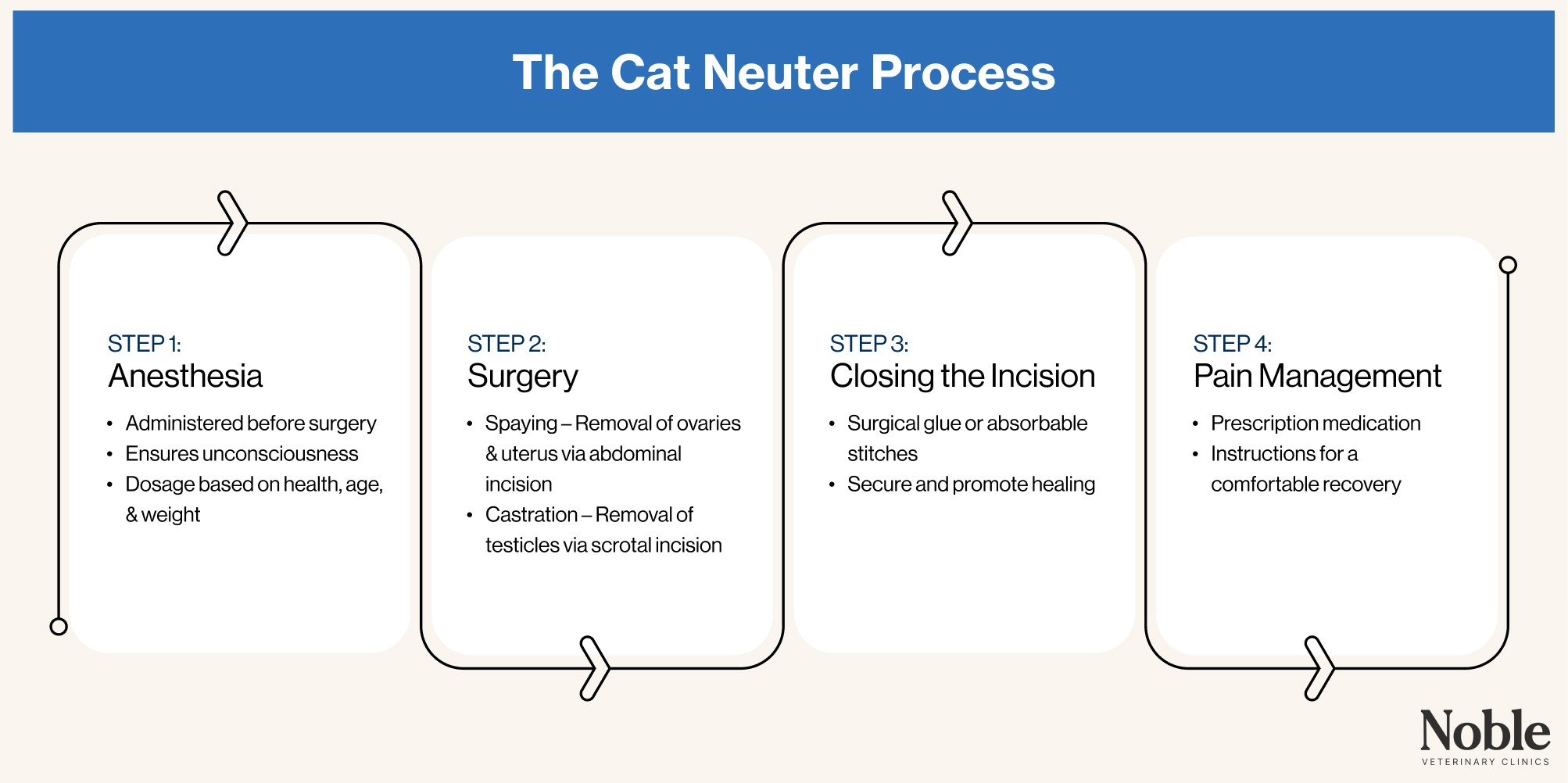
Spaying is a routine surgery handled by our vets. Below is the flow of the procedure.
Administering the Anesthesia
We’ll keep your cat sedated throughout the entire process, with the dose based on their health, age, and weight.
Creating the Incision
Our team makes a small incision in the abdomen, giving us access to the uterus and ovaries. The incision should be about 2-4 inches long, depending on your cat’s size.
Removing the Organs
When the way is clear, our team removes the uterus and ovaries of your cat. We also control the bleeding to avoid any problems.
Closing the Incision
We use surgical glue or absorbable stitches to close the incision site. Intradermal stitches are often preferred because they don’t need to be removed.
Managing Pain After Surgery
As with any surgery, the anesthesia will wear off after some time, and your cat may experience pain. To help them have a comfortable recovery, we will provide pet medications and pain relievers, as well as instructions on how to give them to your cat.
Most cats return home the same day after the spaying surgery. But before you head home, our vets will conduct a final health check and recommend any strategies for post-op care at home.
Post-Op Care for Spayed Cats
During their recovery, provide them with extra care and attention. Post-surgery care requires time and proper knowledge so your cat can have a rapid and safe recovery. Here are some tips for caring for your neutered cat.
Limit physical activity
Keep your cat indoors in a safe and comfortable area. Be sure to restrict any physical activity for at least two weeks to prevent the incision from reopening.
Check the incision regularly
Always monitor the incision site. You’ll know it’s healing when it dries up and continues to appear secure. If you notice any redness, swelling, or pus, contact our vets right away.
Maintain a clean environment
Clean your cat’s recovery space, clean and free from hazards. Replace bedding regularly.
Follow medication guidelines
Always follow our instructions on recovery, especially when it comes to administering medications.
Does My Cat Need to Wear a Cone After Neutering?
Yes, a cone helps stop your cat from licking or chewing on the incision. This will prevent any unnecessary problems such as bleeding or infections. With a collar, your cat’s recovery will be a lot smoother and less painful.

How Long Do Cats Take to Recover From Spaying?
Cats take about 10 to 14 days to recover after the procedure. During the first 24-48 hours, they may be a bit drowsy and uncomfortable, so expect a reduced appetite and lethargy.
During days 3 to 7, you’ll see the signs of recovery. They start regaining their appetites and energy levels, but you should still restrict physical activity.
By day 10 to 14, your cat will most likely have recovered significantly. You’ll see that the incision site is almost fully healed.
Possible Complications of Spaying a Cat
While most spaying procedures have no complications, there can be occasional risks that you must watch out for.
Anesthetic side effects. This complication is quite rare, but it still occurs in some cats, especially in senior cats or those with existing health conditions.
Infections. The spay incision site may become infected when your cat recovers in an unsanitized area or licks or bites the incision.
Herniation. These happen when the cat’s internal organs go through the incision, a problem that needs emergency care.
Loss of appetite and lethargy. It’s normal if your cat feels lethargic and has a reduced appetite. When it goes on for a long time, then a checkup is needed.
What Are the Costs of Spaying a Cat?
At our clinic, the cost for our cat spaying and neutering services starts at AED 1,500 for males and AED 1155 for females. The cost may go up for cats with specific health issues.
"Spaying your cat is a promise for health and happiness."
- Dr. Lidija Krvavac
Final Thoughts
Neutering or spaying your cat is a responsible decision you can make as a pet owner. It can enhance your cat’s health and behavior while also contributing to reducing the stray cat population in Dubai.
With that, if you need help getting started, give us a call. We’ll be happy to assist you and your cat in this huge chapter of your lives.
Frequently Asked Questions


Subscribe to Our Newsletter
Worried about your pet?
We’re here for urgent care, wellness checks, or anything in between.