ORAL HEALTH

Cat Dental Care

Tooth and gum problems often stay hidden until eating becomes painful. We scale and polish under anaesthesia, after bloodwork and full-mouth X-rays, so we find and treat gum disease and damaged teeth early.

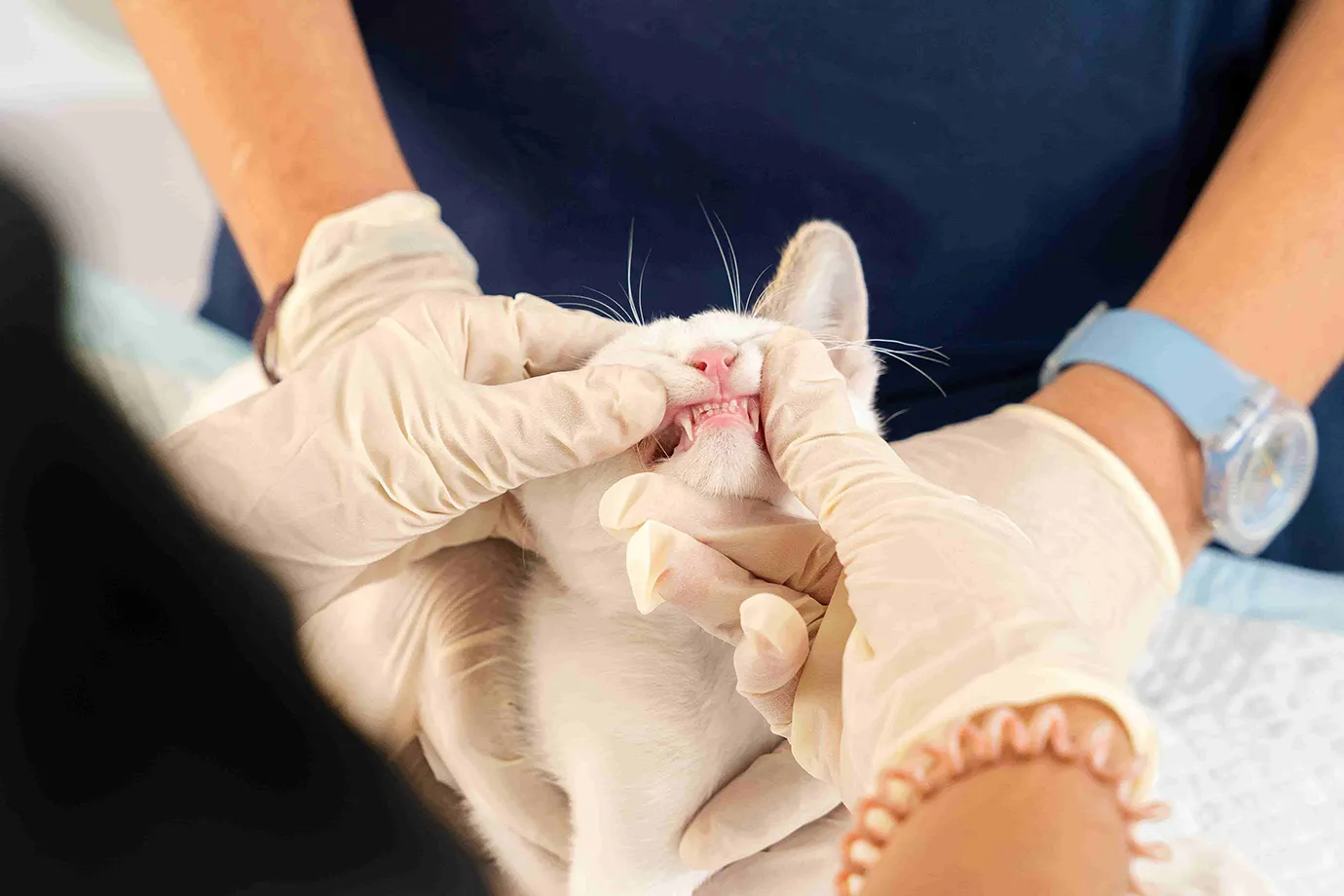
A veterinarian performs a dental examination on a cat that requires teeth scaling

CLEANING

Scaled & polished

Slows plaque coming back

ENVIRONMENT

Calm & controlled

Built for delicate patients

EXAM

Full-mouth X-rays

Every tooth checked

SAFETY CHECK

Bloodwork first

Tailored to your cat's health

THE PROCEDURE

Why does a cat need a professional dental clean?

Dental problems often go unnoticed until they become severe, because cats hide pain and keep eating through discomfort.


A professional clean is done under anaesthesia to remove bacteria, plaque, and tartar above and below the gumline.

Regular cleaning gives your cat real, lasting benefits:

Protects the teeth and gums from periodontal disease and infection

Helps reduce the bacteria that can enter the bloodstream and affect organs beyond the mouth

Catches problems early, during the oral exam

Lowers the risk of serious infections that need costly treatment

Dental scaling by Dr. Lidija

Dental Scaling Explained by Dr. Lidija Krvavac | Noble Veterinary Clinics - Dubai

Noble Veterinary Clinics

Dental scaling by Dr. Lidija

Dental Scaling Explained by Dr. Lidija Krvavac | Noble Veterinary Clinics - Dubai

Noble Veterinary Clinics

Dental scaling by Dr. Lidija

Dental Scaling Explained by Dr. Lidija Krvavac | Noble Veterinary Clinics - Dubai

Noble Veterinary Clinics

KNOW THE SIGNS

How can I tell if my cat has dental problems?

By age 3, most cats show some signs of dental disease, and because cats hide discomfort, the signs are easy to miss. Watch for:

Chronic bad breath

Drooling or pawing at the mouth

Bleeding or inflamed gums

Yellow or brown tartar

Eating slowly or dropping food

Hiding, grooming less, or irritability

Even subtle changes in appetite or behaviour can point to dental discomfort. If you're unsure, let our vets do a quick exam.

START TO FINISH

How does the day unfold?

What to expect, from drop-off to going home.

01. Check-in and health check

We confirm your cat is ready for anaesthesia

02. Anaesthesia

Monitored sleep, so your cat feels nothing

03. X-rays and exam

A look at every tooth and root

04. Cleaning and treatment

A thorough clean, with extractions only when needed

05. Recovery and home

Wake up quietly, then go home with clear instructions

BEFORE
AFTER
BEFORE
AFTER

HOME CARE

What does recovery look like?

What to expect after a clean or extractions.

ONE

The first 48 hours

Your cat may be sleepy and unsteady on the first evening. Keep them warm, quiet and indoors, offer a small, soft meal once fully awake, and give medication exactly as prescribed.

Your cat may be sleepy and unsteady on the first evening. Keep them warm, quiet and indoors, offer a small, soft meal once fully awake, and give medication exactly as prescribed.

TWO

Your cat eats normally

After a clean alone, most cats eat their usual food within a day. After extractions, we suggest soft or wet food for about 10 to 14 days, then normal food again.

After a clean alone, most cats eat their usual food within a day. After extractions, we suggest soft or wet food for about 10 to 14 days, then normal food again.

THREE

Healing after extractions

Gums heal in a couple of weeks, and a little drooling or blood-tinged saliva is normal at first. We book a recheck to confirm everything has settled and your cat is comfortable.

Gums heal in a couple of weeks, and a little drooling or blood-tinged saliva is normal at first. We book a recheck to confirm everything has settled and your cat is comfortable.

FOUR

When to call us

Call us if your cat refuses food for more than 24 hours, bleeds heavily, seems in pain, or has swelling in the face. We will guide you on what to do next.

Call us if your cat refuses food for more than 24 hours, bleeds heavily, seems in pain, or has swelling in the face. We will guide you on what to do next.

PRICING

Dental care costs

We offer transparent pricing for our dental services.

We may need dental X-rays first, especially for older cats or those with related conditions. We explain the plan and costs before any treatment starts.

Dental consultation and oral exam

290 AED

290 AED

290 AED

Professional dental scaling

(final cost quoted after exam, excludes bloodwork)

From 1,300 AED

1,300 AED

Tooth extractions

Quoted after examination, based on complexity

Oral surgery

Custom quote provided following diagnosis

Emergency dental care

Price depends on urgency and severity

Schedule a dental checkup for your cat

Looking to keep your catโ€™s teeth clean and healthy?

Schedule a dental checkup for your cat

Looking to keep your catโ€™s teeth clean and healthy?

Schedule a dental checkup for your cat

Looking to keep your catโ€™s teeth clean and healthy?

Everything You Need to Know

Frequently Asked Questions

Will my cat be in pain afterwards?

We provide pain relief during and after the procedure, and we send medication home with you. Many cats feel better than before because the pain they were hiding is now treated.

Can my cat eat properly if teeth are removed?

Yes. Cats don't chew much, so they cope well without the teeth we remove. Many eat more comfortably afterwards.

Why does my cat need X-rays if the teeth look fine?

Most of each tooth, including the roots, sits below the gumline, so a clean-looking tooth can still be diseased. X-rays let us check every root and the bone around it before we decide on treatment.

Is anaesthesia-free cleaning an option?

We perform every dental clean under anaesthesia. Anaesthesia-free cleaning only polishes the visible surface, and it cannot reach below the gumline, where much of the damage happens. Cats also cannot stay still for X-rays or scaling while awake, so a safe, thorough clean needs anaesthesia.

Is anaesthesia safe for cats?

Yes. Anaesthesia is generally safe for healthy cats, and we check your cat's health before every dental clean, so we know it suits them. For older cats or those with existing conditions, we adjust the plan to fit.

How often should my cat have an oral exam?

Yearly, alongside the wellness exam. Older cats, or those with a dental history, may need one every 6 to 9 months.

Noble Vet Clinics logo