Down Syndrome in Cats: Can Cats Have It?

Many pet owners often wonder about this, especially since the features may be similar. But in short, cats cannot have Down syndrome.
Key Takeaways
Cats cannot have Down syndrome because they only have 19 pairs of chromosomes.
Characteristics in cats similar to Down syndrome include wide-set eyes, flattened faces, and behavioral differences.
Conditions that may present similar symptoms to Down syndrome include cerebellar hypoplasia, hydrocephalus, and Klinefelter syndrome.
Why Can’t Cats Have Down Syndrome?
Cats cannot have Down syndrome because they lack chromosome 21, which humans have. Down syndrome happens when a person is born with an extra copy of chromosome 21. Normally, humans will have 23 pairs of chromosomes.
When a third copy of chromosome 21 is present, known as Trisomy 21, it disrupts normal development. This results in physical and cognitive differences.
Cats, on the other hand, have a unique genetic structure with 19 pairs of chromosomes. This basically means that it’s impossible for them to develop trisomy 21.
What Characteristics Look Like Down Syndrome in Cats?
Some cats may develop physical traits that resemble this condition. Here are Down syndrome-like characteristics in cats that our veterinarians observe:
Wide-Set Eyes
Some cats are born with wide-set eyes. Wide-set eyes can occur in cats with certain craniofacial abnormalities or as a breed-specific trait, as seen in Persian or Russian Blue cats.
Flattened Facial Features
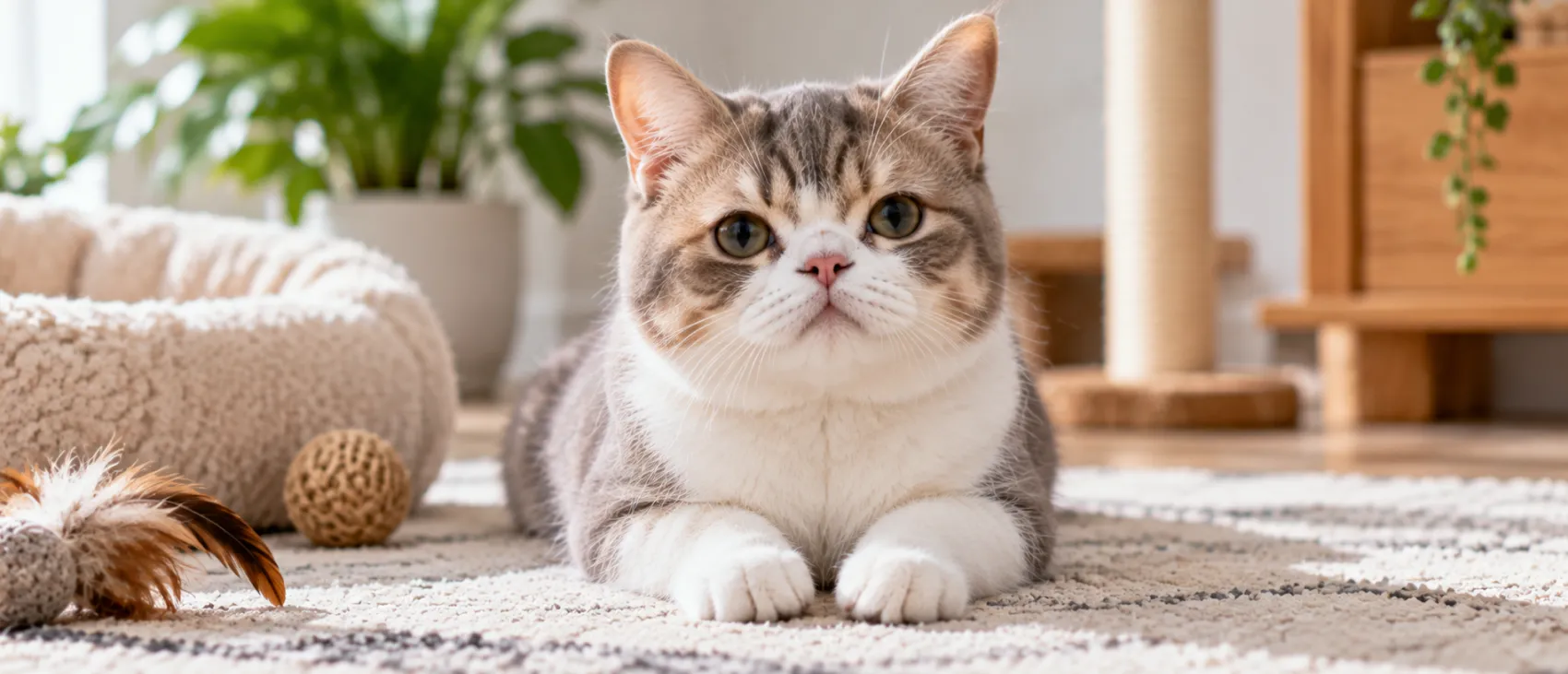
Flattened noses or shortened facial structures are common in brachycephalic breeds like Persians and Exotic Shorthairs. In other cases, congenital deformities may cause a flattened face that can resemble a condition like Down syndrome in cats.
Clumsy Walking
Cats with conditions that affect their balance and mobility may walk clumsily and uncoordinatedly. This way of walking may come from an underdeveloped or damaged brain.
Cognitive or Behavioral Differences
Another characteristic similar to Down syndrome in cats is unusual behavior. Some cats may have neurological or developmental disorders that make them appear different. One example is difficulty learning and responding to commands.
Additionally, cats can have unusual social behaviors, which can include a lack of awareness and excessive vocalization.
Growth or Developmental Delays
Some congenital conditions can result in developmental growth delays in cats. One example is feline panleukopenia, as kittens exposed in utero may experience delayed physical or neurological development.
Other cats may experience slow learning, difficulty with navigating, and abnormal social behaviors.
Sensory or Physical Issues
Some cats may experience problems with their heart, vision, and hearing due to physical abnormalities or structural defects.

What Conditions Are Similar to Down Syndrome in Cats?
Although cats cannot have Down syndrome, other health conditions may present similarly.
Cerebellar Hypoplasia
Cerebellar hypoplasia is a developmental disorder in which the cerebellum fails to develop properly. It happens when a pregnant mother cat gets infected with feline panleukopenia. The virus then crosses the placenta and destroys the kitten’s nerves in the cerebellum.
Cats with cerebellar hypoplasia may display motor delays and awkward movements, similar to the poor coordination seen in some individuals with Down syndrome. Symptoms of cerebellar hypoplasia include:
Uncoordinated or wobbly movements
Difficulty walking, jumping, or maintaining balance
Mild head tremors
Loss of balance and falling
Hydrocephalus
Hydrocephalus is a condition in which the brain fills with cerebrospinal fluid, increasing pressure in the area. This may happen due to congenital factors, injuries, or infections. Breeds such as Siamese, Persian, and Manx cats are predisposed.
Affected cats will experience cognitive impairment and an abnormal skull shape. Other symptoms include:
Enlarged or misshapen head
Vision problems or blindness
Behavioral changes, including confusion or lethargy
Seizures in severe cases
In this guide, we’re going to explain why it's just not possible, what characteristics are similar, and how to care for a cat with special needs.
Frequently Asked Questions






Subscribe to Our Newsletter
Worried about your pet?
We’re here for urgent care, wellness checks, or anything in between.